 Languages:
 My WSU | Student Life | Enterprises | Media | Support Services | Vision 2030 | Procurement | Tenders | Contact

WSU’S DR SEKHEJANE SHOWCASES AFRICAN STEM INSIGHTS AT GLOBAL IAP CONFERENCE
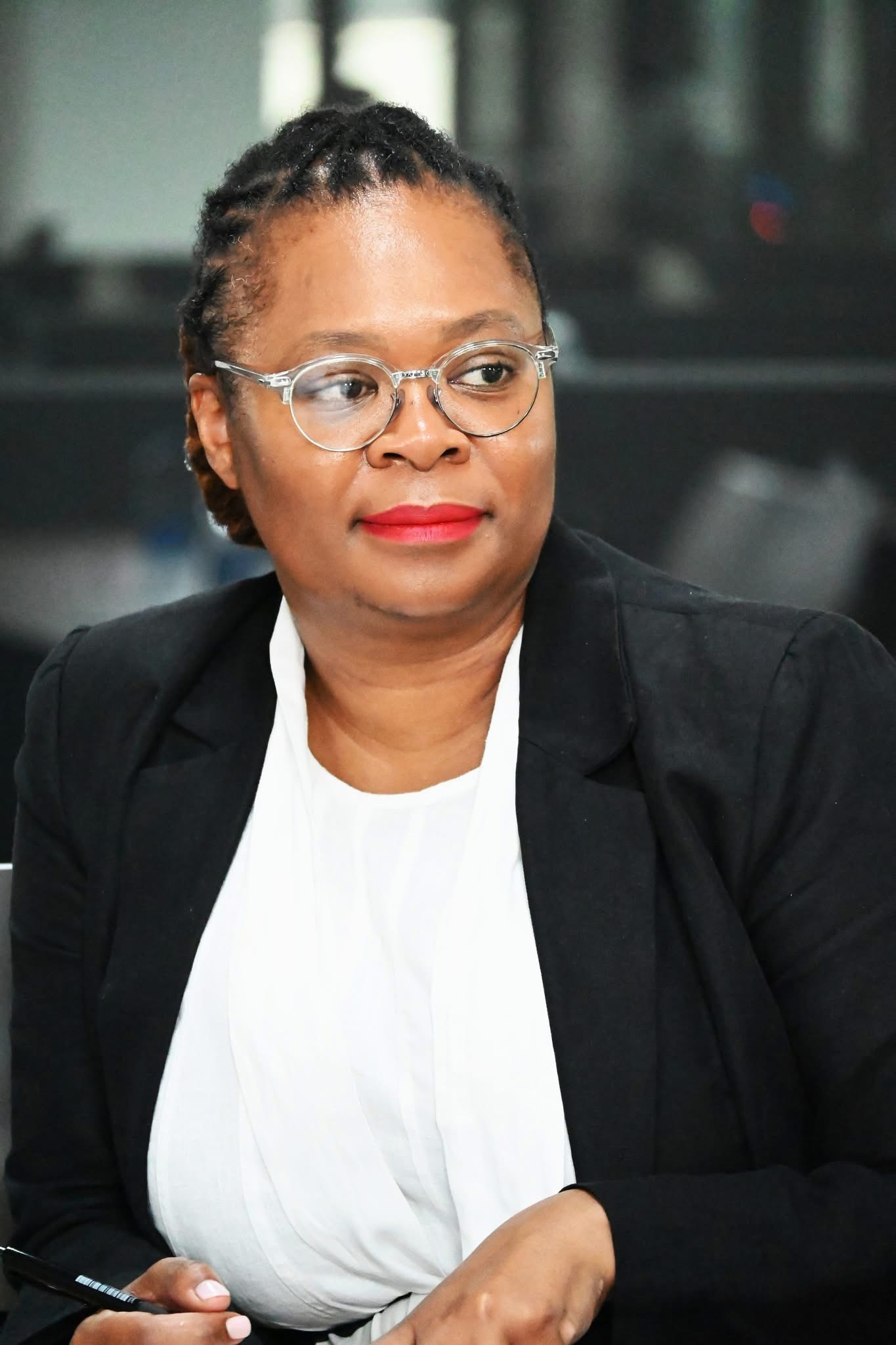
An unbridled passion for advancing research in science, technology, engineering and mathematics (STEM) has propelled WSU Deputy Executive Dean of the Faculty of Natural Sciences, Dr Palesa Sekhejane, onto the global stage.
Her most recent contribution took her to Cairo, Egypt, where she participated in the prestigious 2025 InterAcademy Partnership (IAP) Triennial Conference and General Assembly, held under the theme “Bridging Science, Policy and Society in an Era of Transformation.”
Representing both WSU and the continent, Sekhejane—who serves as an International Science Council Fellow and a member of the global task team mapping the status of women in STEM worldwide—presented emerging evidence from her preliminary global findings, with a particular focus on Africa’s position within the international scientific landscape.
Her session placed acute emphasis on early results from the global gender survey, unpacking the impacts, gaps, and challenges affecting women’s participation and progression in STEM fields.
Sekhejane’s contribution highlighted the systemic barriers and opportunities that shape the future of women in STEM across the continent.
“The funding and opportunities gap is taking a long time to close, and the participation and retention of women in sciences is taking time to break beyond the 35% of the global average. The institutional policy landscape is not translating to the transformation of the working environment/conditions,” she said.
Sekhejane emphasised that strengthening the participation and retention of women in STEM requires deliberate, systemic action, including integrating care-economy support mechanisms, intensifying the monitoring and evaluation of workplace conditions, and expanding gender-responsive education and training. She further highlighted the importance of proactive, intentional policy design—such as enforcing and evaluating quota implementation in order to drive measurable progress in gender equity across STEM disciplines.
To provide context and deeper analysis, Sekhejane outlined the purpose and scope of the global gender survey, stating: “The report examines the representation and participation of women scientists across science, medical and engineering academies, as well as young academies, and extends this assessment to international scientific unions. Building on earlier surveys conducted in 2015 and 2020, the study aims to deliver updated data on women’s representation, participation, and leadership within these institutions worldwide.”
She added that the survey results should be used to assess institutional transformation plans and, beyond the quota system, to evaluate how quota implementation has contributed to institutional progress. The report also encourages deeper reflective analysis.
As a concluding reflection, Sekhejane warned: “Turning around the wheel for equity in the science is taking longer in the science academy, as a result, there is a risk of losing the benefits from advocacy and scholarship activism to promote inclusion of women beyond the numbers game.”
By Thando Cezula
Contact Us
Email Address:
Contact Numbers:
Mthatha: 047 502 2100
Butterworth: 047 401 6000
East London: 043 702 9200
Potsdam: 043 708 5200
Chiselhurst: 043 709 4000
Follow us on Social Media
 |
 |
 |
 |
 |
 |
