

About Walter Sisulu
Get in touch
Email Address:
Contact Numbers:
Mthatha: 047 502 2100
Butterworth: 047 401 6000
East London: 043 702 9200
Potsdam: 043 708 5200
Chiselhurst: 043 709 4000
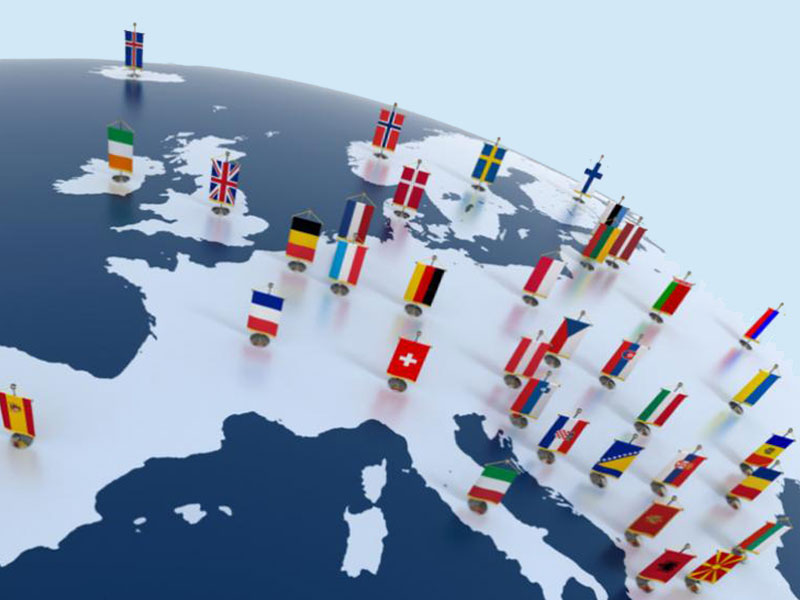
Internationalisation is a strategic priority at Walter Sisulu. The University recognises that global collaboration enhances the quality of teaching, research and community engagement while preparing graduates to operate in an increasingly interconnected world.
Internationalisation is understood as the process of integrating international and intercultural perspectives into teaching, learning, research and service functions within the University. Through international partnerships and collaborative initiatives, the University strengthens academic cooperation with institutions across South Africa, Africa and the rest of the world.
iYunivesithi Walter Sisulu Internalitasation Strategy
The Internationalisation Strategy focuses on six key areas:
1. Strategic Partnerships
Developing institutional partnerships with universities, research organisations, government institutions and industry partners.
2. International Mobility
Promoting participation of students and academic staff in international experiences such as exchanges, research collaboration and academic visits.
3. Recruitment and Support of International Students
Enhancing recruitment and providing services that support international students.
4. Internationalisation of the Curriculum
Integrating global perspectives into academic programmes and teaching practices.
5. International Research and Development Collaboration – Promoting collaborative research initiatives with international partners.
6. International Funding Opportunities
Exploring opportunities for international research funding and development programmers.
Below is a list of our ongoing partnerships
Walter Sisulu Partner | Focus Area |
Staff and student exchange, curriculum exchange and staff development joint supervision of postgraduate students, research | |
Academic collaboration, student and staff exchange, research collaboration | |
Research collaboration, staff and student exchange | |
Student and staff exchange. Sharing of knowledge on capacity building and operations. Curriculum exchange and development. Shared opportunities for research development | |
Research collaboration, staff and student exchange | |
Rural development (community engagement), medical education including postgraduate education | |
Staff and student exchange, curriculum exchange and development, joint supervision of postgraduate students. Learning and teaching, research and community engagement | |
Clinical Associate Programme | |
Staff and student exchange, curriculum exchange and development, joint supervision of postgraduate students. Learning and teaching & research | |
Staff and student exchange, curriculum exchange and development, joint supervision of postgraduate students. Learning and teaching & research | |
Staff and student exchange, curriculum exchange and development, joint supervision of postgraduate students. Learning and teaching & research | |
Staff and student exchange, curriculum exchange and development, joint supervision of postgraduate students. Learning and teaching, research and community engagement | |
Research collaboration, co-supervision of postgraduate students, academic collaboration | |
Staff and student exchange; research; curriculum exchange. Establishment of Confucius Institute | |
Staff and student exchange, curriculum exchange and development, joint supervision of postgraduate students. Learning and teaching, research and community engagement | |
Social Accountability | |
Health Informatics | |
Teaching and Research (Health Sciences) | |
Teaching and Research (Health Sciences) | |
Foundation for the Advancement of International Medical Education and Research (FAIMER) | Health Professions Education and Research |
Technical Support on Programmatic Training Activities and Clinical Mentoring | |
Development of Training Modules and Protocol | |
Research Collaboration, Academic Collaboration | |
Korea Institute of Toxicology, KOREA | Research Collaboration |