 Languages:
 My WSU | Student Life | Enterprises | Media | Support Services | Vision 2030 | Procurement | Tenders | Contact

WSU USHERS IN A NEW ERA AS DR THANDI MGWEBI BEGINS HER TENURE AS VICE-CHANCELLOR AND PRINCIPAL
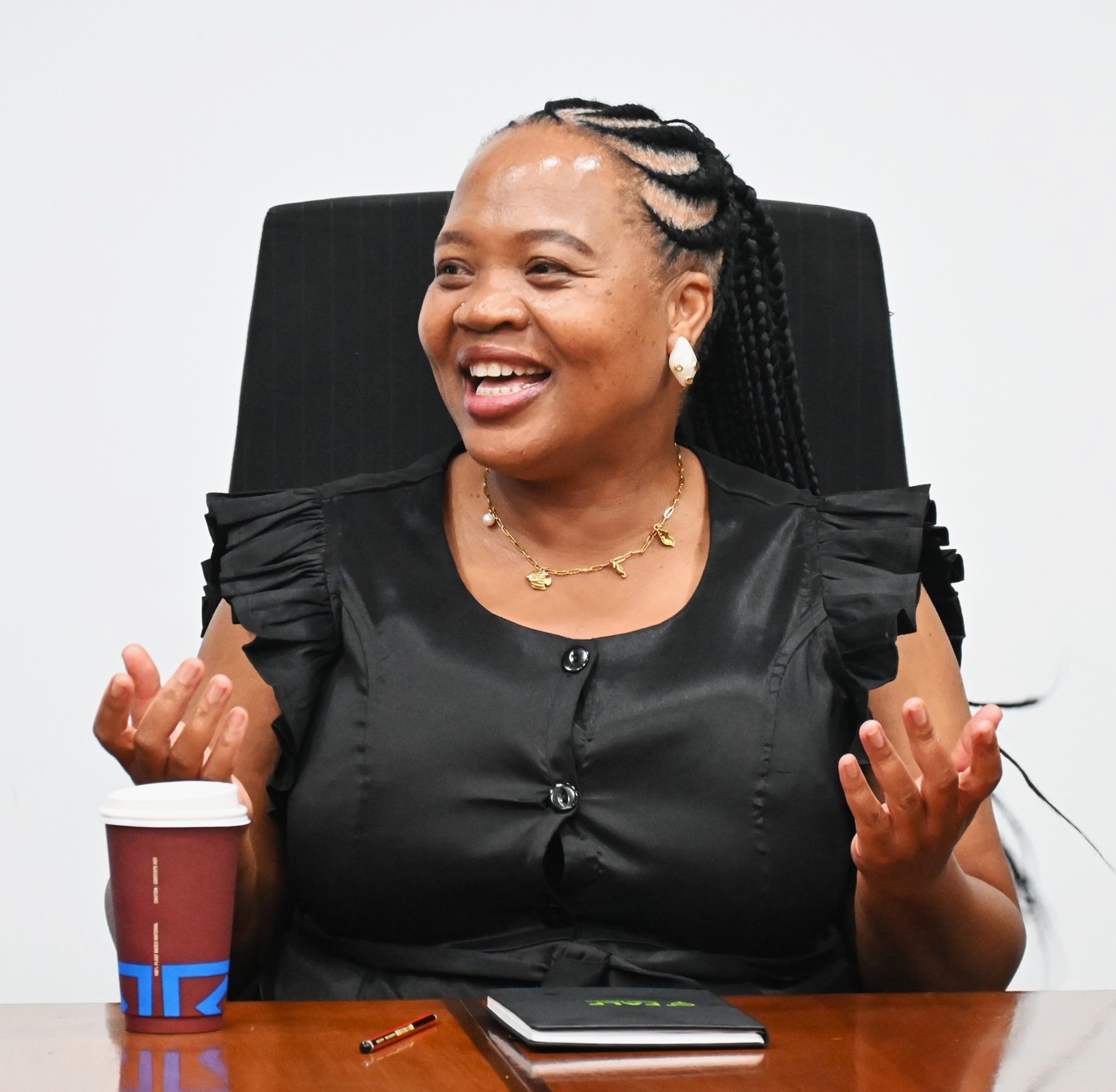
Walter Sisulu University (WSU) has formally welcomed Dr Thandi Mgwebi as its Vice-Chancellor and Principal, marking the beginning of a new leadership chapter focused on transformation, institutional renewal and long-term sustainability.
Mgwebi’s assumption of office coincides with the critical implementation phase of Vision 2030, positioning the university to move decisively from strategy to execution and to chart a clear path beyond 2030.
WSU alumna, Mgwebi returns to WSU with extensive national and international experience in higher education leadership, research, innovation, business advancement and global partnerships.
“Being appointed the WSU Vice-Chancellor is deeply humbling and a full-circle moment of service to education, to the Eastern Cape, and to young people whose potential must never be limited by geography or history,” she told millions of South Africans during a live interview on SABC’s MorningLive on Sunday.
She further described her appointment to WSU scribes as both a homecoming and a calling, grounded in a deep commitment to the university’s developmental mandate in the Eastern Cape and its broader contribution to South Africa and the continent.
“This appointment is deeply humbling and profoundly meaningful to me. I return not just as a Vice-Chancellor, but as an alumna whose life was shaped by this institution and by the values it stands for. My leadership is about stewardship and impact wit focus on strengthening the university so that it can fully serve current and future generations,” she said.
Mgwebi has articulated a leadership agenda anchored on three interrelated pillars: transform, modernise and optimise. She explained that these pillars are not abstract concepts but practical drivers of change.
“Transformation means ensuring that access, relevance and student success are real and measurable. Modernisation is about renewing how the university functions, including digital learning and infrastructure. Optimisation focuses on doing things better with clearer roles, stronger governance and efficient systems,” she said.
Central to her tenure is the disciplined implementation of Vision 2030 and beyond. Mgwebi interprets the vision as a call to reposition WSU as a stable, relevant and high-impact developmental university that is locally rooted while globally connected.
“The goal is to have a curriculum that is globally competitive and locally responsive. Vision 2030 must be something our students and staff experience every day not just a document, but a lived institutional reality,” added Mgwebi.
Mgwebi stressed the importance of new partnership models built on mutual benefit and optimising relations with key stakeholders across government, industry, communities and international networks.
“Partnerships will be judged by their impact, particularly in expanding opportunities for students, strengthening research and innovation, and supporting regional development in the Eastern Cape,” she said.
Her first 100 days in office have been deliberately structured as a listening, learning and alignment period, focusing on stakeholder engagement, institutional assessment, governance and financial sustainability.
This approach, she believes, is essential for rebuilding trust, strengthening leadership cohesion and laying a solid foundation for accelerated progress towards Vision 2030.
“Trust is built through consistency, openness, and follow-through. For me, listening and consultation are not symbolic they are essential to effective leadership. My first commitment is to create regular, structured spaces for engagement with students, staff, unions, Council, and external stakeholders, so that people feel heard and respected. Consultation must be meaningful, not performative, and feedback must inform decisions,” said Mgwebi.
As she begins her tenure, Mgwebi has called on students, staff, alumni and partners to work collectively in shaping the future of the university.
During the wide-ranging MorningLive interview, Dr Mgwebi put emphasis on three strategic priorities she believed will shape her five-year term, namely, clear roles and expectations; ethics and transparency; and the enforcement of university-wide collaborations.
Dr Mgwebi further highlighted WSU’s geographic and socio-economic context as a strategic asset rather than a limitation. She noted that the university’s rural setting positions it uniquely to drive development and social change.
“Our context presents an opportunity for the university to make real and tangible developmental impact,” she said, emphasising WSU’s responsibility to its surrounding communities.
Addressing the current realities facing the institution, Dr Mgwebi acknowledged challenges related to the university’s academic profile, as well as its administrative and operational systems. She stressed, however, that these challenges are not unique to WSU.
“WSU isn’t an exception to what is happening across the global and local higher education landscape,” she said, adding that institutional stability must be built through ethical leadership and sound governance.
“We must build stability through predictability, trust, and ethical leadership, restore confidence by strengthening governance and management clarity, and ensure consistent communication so we can deliver on our commitments to the WSU community,” Mgwebi added during the broadcast.
By Anita Roji and Thando Cezula
Contact Us
Email Address:
Contact Numbers:
Mthatha: 047 502 2100
Butterworth: 047 401 6000
East London: 043 702 9200
Potsdam: 043 708 5200
Chiselhurst: 043 709 4000
Follow us on Social Media
 |
 |
 |
 |
 |
 |
