 Languages:
 My WSU | Student Life | Enterprises | Media | Support Services | Vision 2030 | Procurement | Tenders | Contact

WSU AND DSTI UNITE TO RECLAIM INDIGENOUS KNOWLEDGE
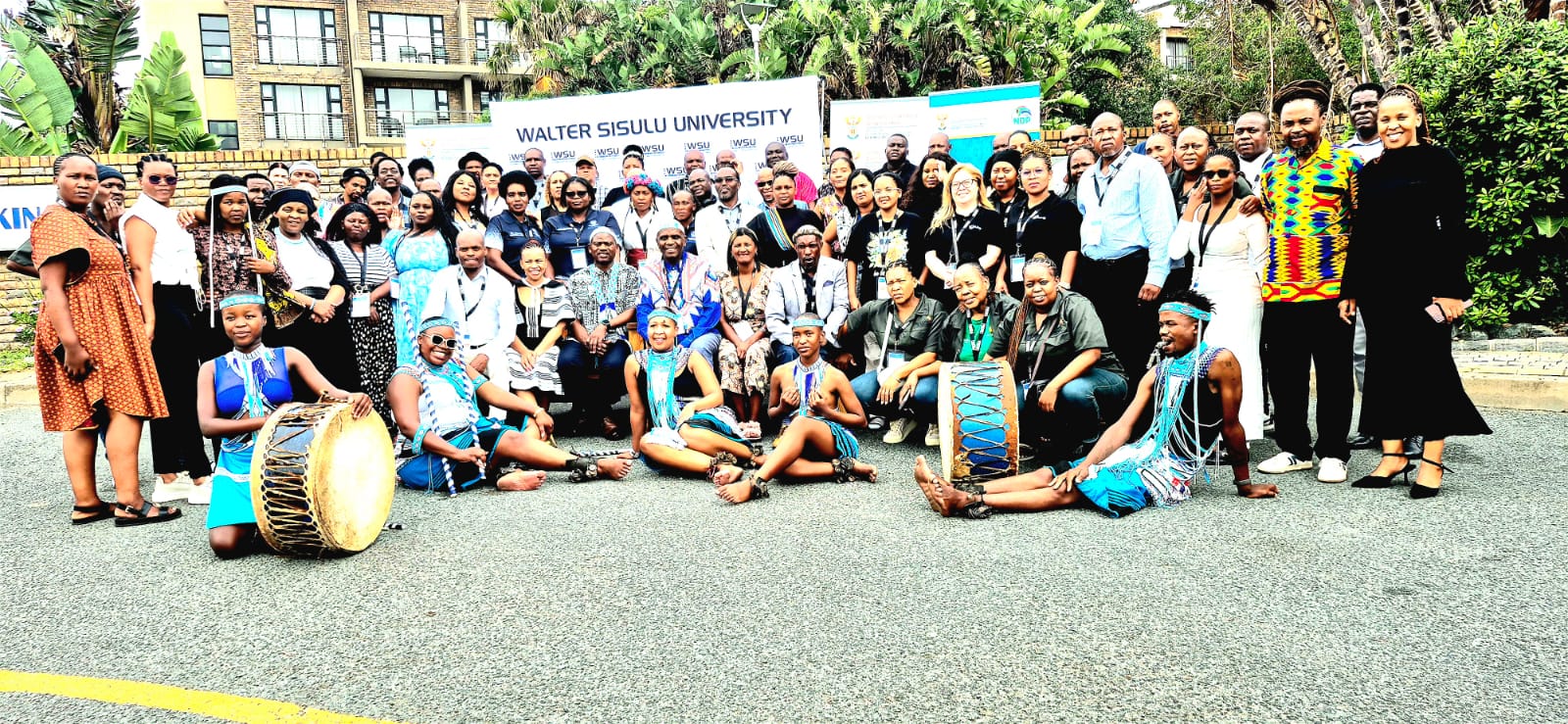
Walter Sisulu University (WSU) and the Department of Science, Technology and Innovation (DSTI) have launched the three-day Indigenous Knowledge Systems (IKS) Documentation Centre Knowledge-Sharing Forum in East London.
In a powerful showcase of collaboration and cultural resurgence, the forum brings together academics, traditional leaders, researchers and community knowledge holders to strengthen the integration of traditional knowledge with modern research and policy.
Delivering the welcoming address, Executive Dean of the Faculty of Natural Sciences, Professor Albert Modi, described the forum as both timely and necessary.
He challenged academics and policymakers to reflect critically on the relevance of education and the urgency of documenting indigenous knowledge before it is lost.
“If you allow the current generation of my mother to perish without sucking enough of the blood and what is in their bones so that it can be documented and used for innovation, you would have failed this country,” Prof Modi said.
He further outlined the faculty’s bold five-year vision anchored in rural development, science for society and global relevance. Among the flagship initiatives is the Eastern Cape Rural Innovation and Food Systems Programme, aimed at addressing long-standing gaps in agricultural education and training in the province.
That call for reflection and partnership was reinforced by Mr Imraan Patel, Deputy Director-General for Research Development and Support at DSTI.
Patel reflected on South Africa’s early leadership in Indigenous Knowledge Systems, noting that while global recognition of indigenous knowledge has grown significantly, the country was already ahead of the curve.
“This year marks the start of what I see as a decade of acceleration of action to build on the existing policy framework and to take that into a next policy environment,” he said that referring to the finalisation of regulations, expanded consultations and the strengthening of institutional architecture to support indigenous knowledge protection and use.
He highlighted developments such as a national registration system and the establishment of a formal office to regulate and coordinate IKS work.
The programme also shifted into deeper engagement with a round-table discussion under the theme “Restoring Our Health through Indigenous Plants.”
Facilitated by Dr Gilbert Siko, Director of Marine and Polar Research and Palaeosciences at DSTI, the session brought together panellists from academia, traditional leadership and community practice.
Discussions explored the health potential of indigenous plants such as moringa, with calls for further research, responsible product development and culturally sensitive commercialisation that can benefit communities while restoring African health practices.
The voice of traditional leadership added depth to the conversation. Delivering a message of support, Chief Landubuzwe Ngwekazi of the House of Traditional Leaders reminded delegates that indigenous systems are inseparable from African identity.
“Traditional leadership will always be there. It was part of us and it will always be part of our lives,” he said.
“Europeans and other people from all over the world, they come and take our natural resources that are part and parcel of our indigenous system. They use them and say they modernise them and come back and sell it to us with high prices,” he said.
He further urged young people to reclaim and protect ancestral wisdom.
Adding a deeply personal dimension, WSU Deputy Vice-Chancellor for Research and Internationalisation, Professor Nosisi Feza, delivered a message of support that challenged the academic community to confront the historical erasure of African knowledge.
“This is about who we are and I am trying to boost our esteem because we are the most intelligent people I have ever known; I remember watching and embracing and enjoying while I was scared to die during COVID-19. When our knowledge, which is indigenous, was taking space, powerful, and leading in saving lives. But even today, after all that, when we reflect nothing isa said about it,” she said.
At its core, the three-day engagement sought to build African confidence in scholarship while creating pathways for sustainable development rooted in local heritage.
By: Yolanda Palezweni
Contact Us
Email Address:
Contact Numbers:
Mthatha: 047 502 2100
Butterworth: 047 401 6000
East London: 043 702 9200
Potsdam: 043 708 5200
Chiselhurst: 043 709 4000
Follow us on Social Media
 |
 |
 |
 |
 |
 |
