 Languages:
 My WSU | Student Life | Enterprises | Media | Support Services | Vision 2030 | Procurement | Tenders | Contact

Oversight Visit Could Bear Fruit for WSU Following Parliamentarians’ Visit to Komani Campus
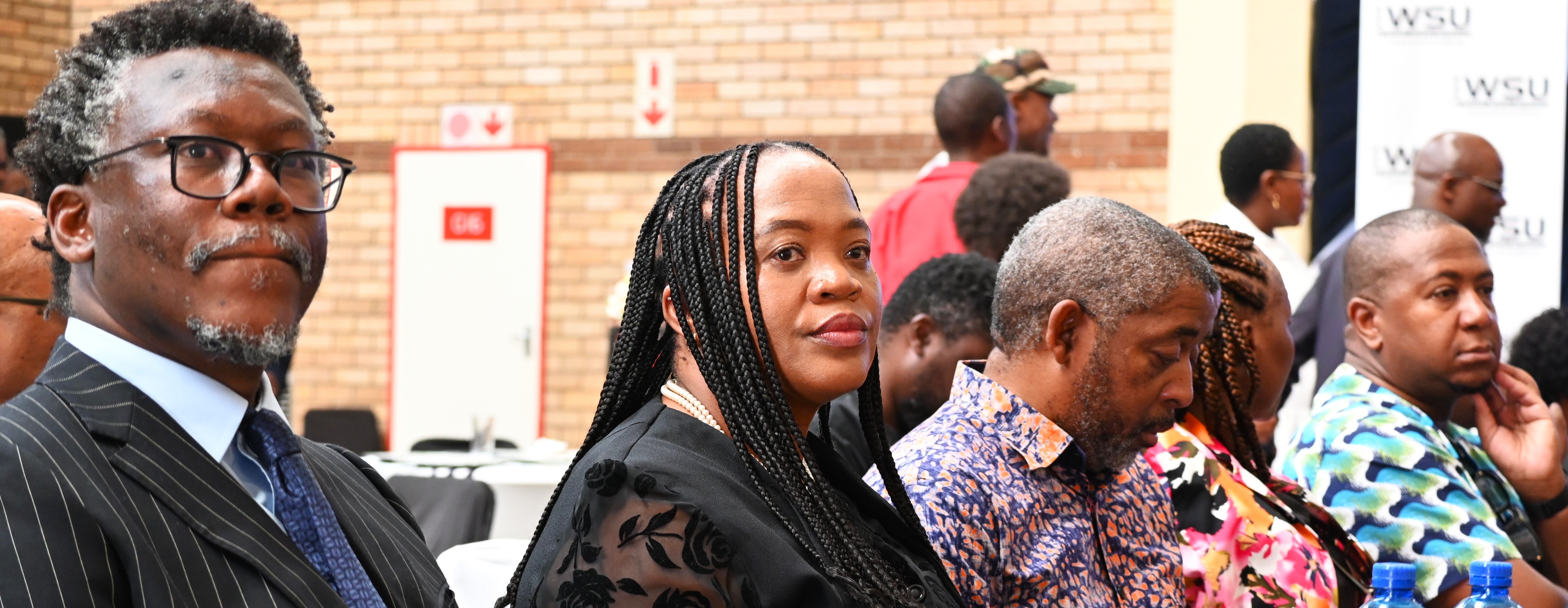
Walter Sisulu University’s ongoing efforts to address persistent water supply crisis plaguing the university’s Komani campus have received a thumbs up from the Parliamentary Portfolio Committee on Higher Education.
During an oversight visit at the campus on Monday, the committee’s chairperson Honourable Walter Tebogo Letsie described the implementation of measures taken by the university to end the water cuts as “satisfactory”.
Letsie and his delegation converged on the campus as part of a follow-up engagement after concerns were presented during WSU’s appearance before Parliament in Cape Town in November last year.
The water project, is just one example in a series of commitments made in response to long-standing challenges raised by staff and students, with the water challenge being a central issue.
While acknowledging ongoing shortcomings, the committee expressed cautious optimism about the progress made on this critical infrastructure project.
“We saw the pump station that the university is building to address the critical provision of water infrastructure and resources, and from my perspective, the efforts are satisfactory thus far,” Letsie noted.
Giving a background to the visit, Letsie added: “The reason we came to this campus was because of the various issues and challenges raised by staff and students faced by the WSU community, particularly regarding the crisis of water supply at the Komani Campus.”
The delegation was received by the WSU Council and executive management, led by Council Chairperson Advocate Thembeka Nguikaitobi SC, before embarking on a walkabout at the Whittlesea Delivery Site.
There, members inspected a water infrastructure project currently under construction, including a pump station aimed at stabilising the campus’s water supply through improved self-sufficiency.
The oversight visit also brought attention to teaching and learning facilities.
A tour of the site’s largest lecture hall, which accommodates 200 students, raised concerns about the size of the projector screen, poor acoustics, and the steep incline of the venue.
These issues were formally noted, with the Deputy Vice-Chancellor for Institutional Support and ICT committing to further investigate.
More pressing concerns emerged during inspections of the computer laboratories, where the committee observed insufficient, outdated, and unreliable equipment—highlighting broader challenges in the university’s ICT infrastructure.
In response, Letsie sought input from a senior Department of Higher Education and Training (DHET) official, who advised the university to apply for a DHET rural education development scheme that could enable the procurement of modern computers.
“Clearly, there are issues with the computer labs, as is the case in other universities, especially those that are historically disadvantaged and found in rural areas. We must not waste any more time in doing whatever we can as this parliamentary committee to facilitate actions that can lead to the delivery of adequate computers to WSU,” said Letsie.
Discussions also focused on possible mechanisms to unlock approximately R103 million in funds accrued as bank interest over recent years.
Access to these funds could significantly bolster the university’s plans to refurbish student residences.
Letsie undertook to engage DHET on the matter, in an effort to secure approval for WSU to access the funds and channel them towards much-needed infrastructure improvements.
By Thando Cezula
Contact Us
Email Address:
Contact Numbers:
Mthatha: 047 502 2100
Butterworth: 047 401 6000
East London: 043 702 9200
Potsdam: 043 708 5200
Chiselhurst: 043 709 4000
Follow us on Social Media
 |
 |
 |
 |
 |
 |
