 Languages:
 My WSU | Student Life | Enterprises | Media | Support Services | Vision 2030 | Procurement | Tenders | Contact

ARCHBISHOP MAKGOBA ANNUAL LECTURE CALLS FOR CONSCIENCE LEADERSHIP AND EQUALITY
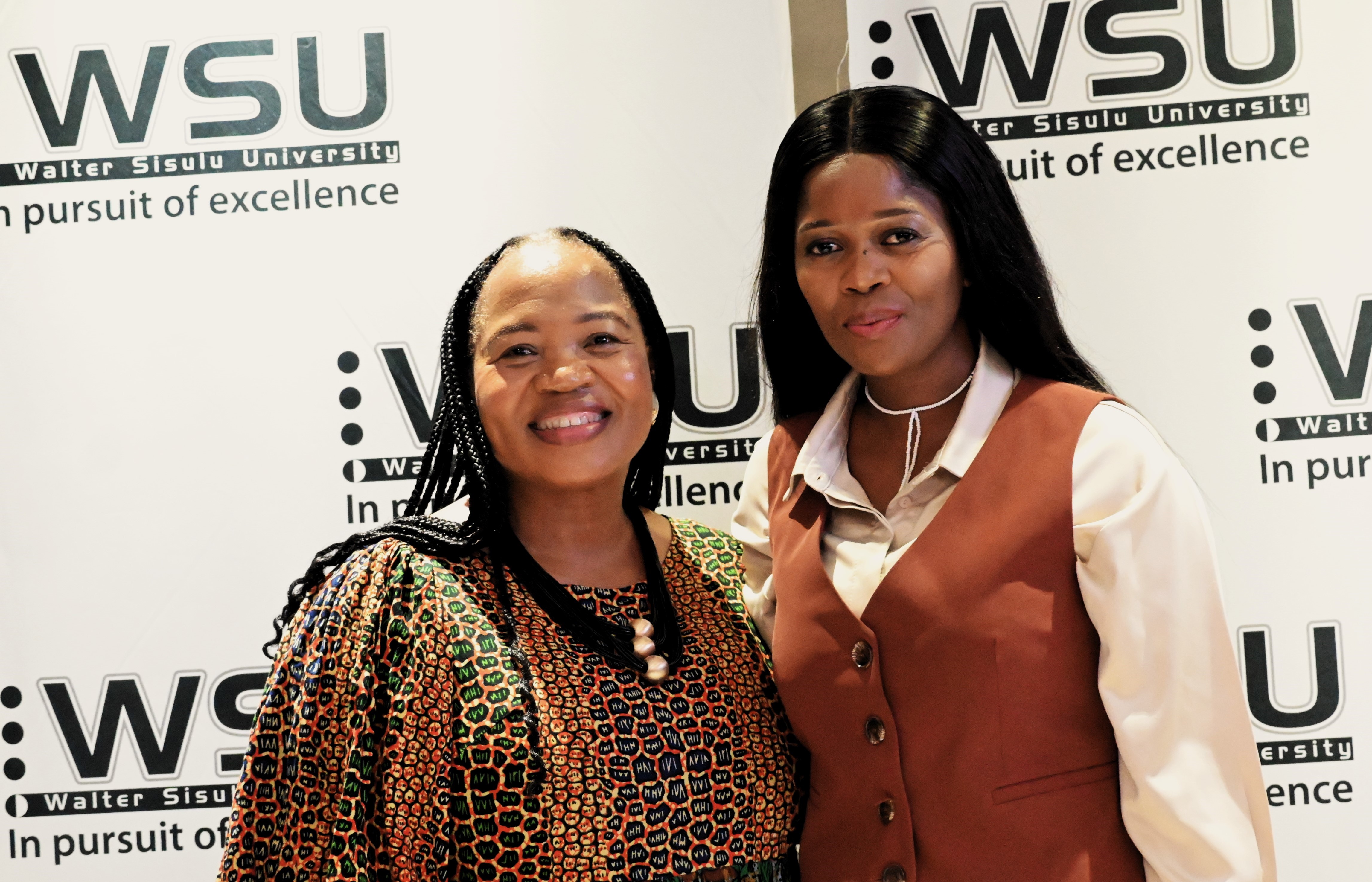
Men must be freed from the chains of patriarchy and society must embrace a future where men and women live side by side as equals.
These were the powerful sentiments shared by Eastern Cape MEC for Sport, Recreation, Arts and Culture, Sibulele Ngongo, during the Archbishop Thabo Makgoba Annual Lecture hosted by Walter Sisulu University (WSU) in East London on Wednesday evening.
The event drew WSU senior leadership, students, and members of the broader community, creating a space for reflection and moral accountability.
WSU Vice-Chancellor and Principal, Dr Thandi Mgwebi, set the tone for the evening with a welcoming message acknowledging the roles of religion and spirituality play in society.
“We gather on this sacred day of the Christian calendar, Ash Wednesday, a day of humility, reflection, and renewal. It is a day that calls us to examine our conscience, not only as individuals but as institutions and as a society,” Mgwebi said.
Her words emphasised that the lecture was not merely ceremonial but an invitation to hold faith, community, and leadership to the highest standard.
She reaffirmed WSU’s commitment to transformative, socially responsive, and ethically grounded education, noting that the university’s work is rooted in a province marked by both historical injustice and immense potential.
Ngongo’s keynote addressed patriarchy head-on as she reflected on the gendered roles in societies, and clearly stated that it is not only women who must be freed from these roles.
She challenged the audience to interrogate the foundations of inequality, emphasising that gender is not a natural or God-given construct but one shaped by society through institutions such as the family, the church, schools, and the state.
“If society has created these roles, then society also has the power to change them,” Ngongo said.
Drawing on South Africa’s complex history, she highlighted the enduring impact of colonialism and its particular oppression of African women.
“Colonialism in our country was a special type because we occupy the same land as our colonisers, and deeply embedded in that system was the oppression and exploitation of black people, particularly African women,” she said.
She also noted that women’s leadership continues to be met with harsher scrutiny, often tied to societal perceptions of their bodies, while men are judged more leniently.
Despite these challenges, Ngongo emphasised education as a powerful equaliser.
She said only an educated and conscious society can fully appreciate the destructive nature of gender-based violence and femicide and work to break these cycles within families and communities.
Ngongo also took a moment to acknowledge WSU’s commitment to women’s leadership. She applauded the university for creating opportunities that elevate women into positions of influence, highlighting the historic achievement of having two female vice-chancellors in consecutive years.
“Walter Sisulu University is leading by example, demonstrating that when women are empowered to lead, institutions and society as a whole benefit,” she said.
The lecture also took a deeply personal turn as Archbishop Thabo Makgoba joined virtually to share the story of the Archbishop Thabo Makgoba Development Trust (ATMDT), the platform that enables the annual lecture.
“It is an honour to be associated with Walter Sisulu University. This partnership is not transactional and it is not coincidental; it strikes deep in my heart,” he said.
Established in 2012, the Trust was born out of a desire to respond meaningfully to enduring social needs, guided by the pillars of food security, social justice, and education. Over the past 14 years, it has supported individuals and institutions pursuing educational and developmental goals, particularly those facing financial hardship.
“This evening’s lecture falls squarely within the education legacy of the Trust,” Makgoba said, expressing gratitude to WSU for sustaining this platform for dialogue.
His closing words echoed the spirit of the evening, compassion paired with conviction.
“My sincere appreciation goes to the University for partnering with the Trust in creating and sustaining this important platform for dialogue, may God bless you and this institution and all who are part of it. God loves you and so do I.” he said.
By: Yolanda Palezweni
Contact Us
Email Address:
Contact Numbers:
Mthatha: 047 502 2100
Butterworth: 047 401 6000
East London: 043 702 9200
Potsdam: 043 708 5200
Chiselhurst: 043 709 4000
Follow us on Social Media
 |
 |
 |
 |
 |
 |
