 Languages:
 My WSU | Student Life | Enterprises | Media | Support Services | Vision 2030 | Procurement | Tenders | Contact

WSU & TUT TACKLE THE SILENT COLLAPSE OF MATHEMATICS AND COMMERCE IN SCHOOLS
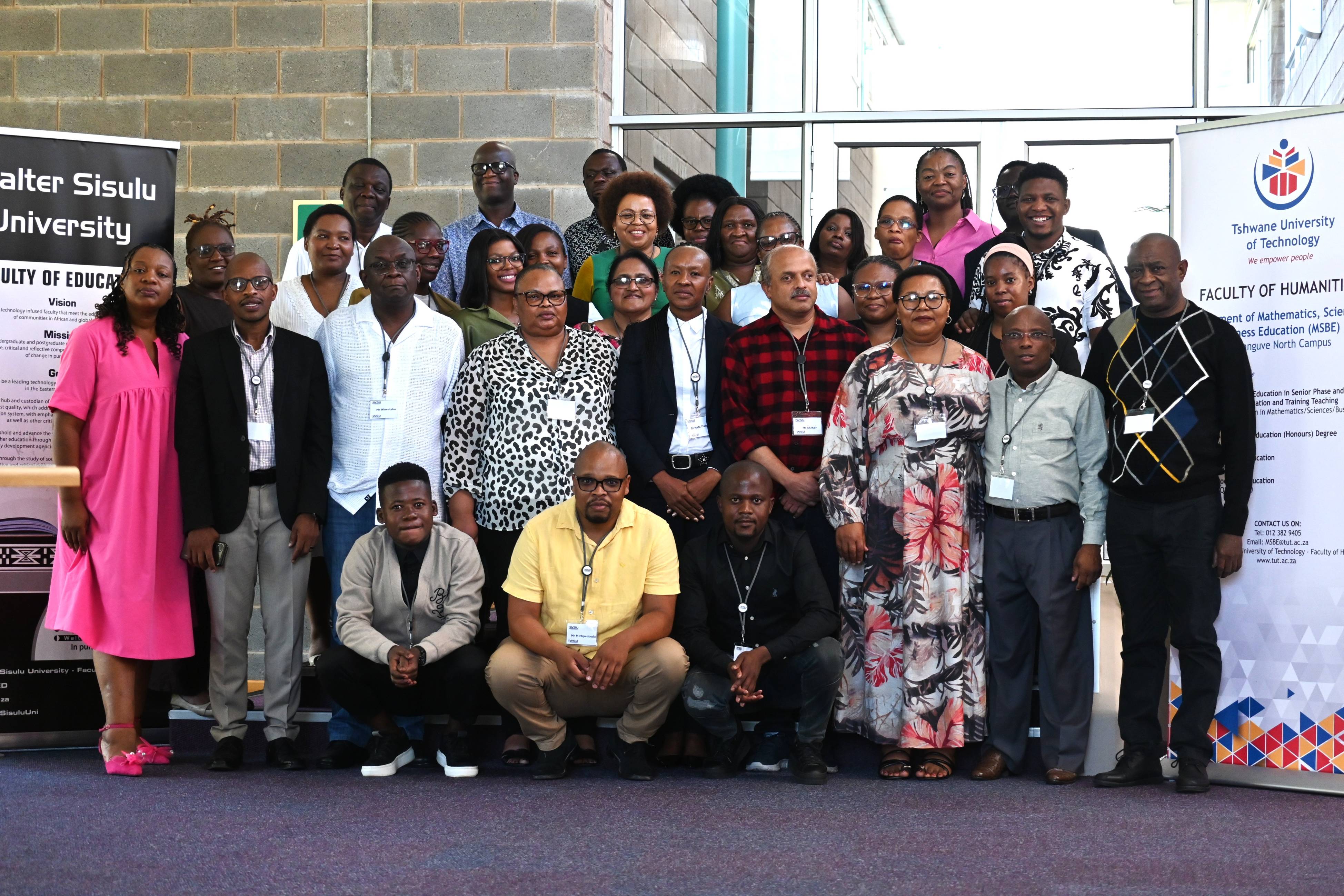
Walter Sisulu University and Tshwane University of Technology have sounded the alarm over a concerning practice by some high schools who reportedly steer learners away from key subjects such as Mathematics and Accounting in order to improve overall pass rates.
The concern was raised during a Curriculum Mapping and Alignment engagement session between the two universities at the East London health Resource Centre at which the schools were criticized for “playing the system”.
Central engagement of the 25 February event were conversations about the state of subject offerings in schools and their long-term implications for higher education and the country.
"We are facing a crisis, the closure of commerce programmes and the elimination of Consumer Studies in some schools. As a result, we are forging collaboration with TUT so that their experts can come to us and model good practice on how they offer this combination of subjects," said Business Management Education HoD, Dr Zikhona Seleke.
TUT Mathematics specialist, Steven Nkwatshu stated that the deliberate steering of learners away from Mathematics and commercial subjects had occurred in the past, often driven by pressure to produce favourable pass rates.
Stressing the implications of this, Nkwatshu said: "The implications could be high failure rates due to poor preparation. If students are not properly prepared in high school, there is no way we, as a university, can move forward effectively. Proper preparation at high school level is very important."
"For the country, if we have a large population of learners and graduates who do not possess critical skills, we will be left behind. We won’t be able to compete economically or in the sciences," he Added.
Despite a matric pass rate which has increased exponentially in the past few years, Consumer Sciences specialist, Dr Olivia Mafa-Theledi highlighted that the phasing out of critical subjects such as commerce and mathematics posed a great threat to the quality of matriculants that high schools were producing. Learners would in turn not meet tertiary institutions' requirements for certain programmes which would enable them to compete in the job market and be active participants in the economy.
To mitigate this threat, Nkwana said: "Universities can visit schools and engage with teachers in subject meetings. They can attend classes to observe what is being done and identify gaps. From the university side, advisory committees can be established where these matters are discussed so that a clear way forward can be developed."
At the 2025 WSU MIT Conference, BME HoD, Dr Zikhona Seleke and Masters student, Avela Ngqunguza highlighted a growing trend of Eastern Cape schools discontinuing accounting, and in some cases, shutting down the entire commerce stream.
Ngqunguza asserted then that the issue was not only robbing students of career opportunities and entrepreneurial skills but was cutting off access to vital financial literacy.
To help sustain the commerce stream, WSU has undertaken a variety of approaches, including engaging with schools and policy makers to see how best the issue can be addressed.
“We have hosted an educational dialogue that brought together key players in the education sector to confront the ongoing phasing out of commerce. Their response was encouraging, with many showing a willingness to support interventions led by the university,” said Seleke.
Seleke added that through their engagements, they had seen in improvement, with some school principals who had previously shut down commerce streams now reopening the streams.
By Yanga Ziwele
Contact Us
Email Address:
Contact Numbers:
Mthatha: 047 502 2100
Butterworth: 047 401 6000
East London: 043 702 9200
Potsdam: 043 708 5200
Chiselhurst: 043 709 4000
Follow us on Social Media
 |
 |
 |
 |
 |
 |
