
Languages:
Staff Apps | Enterprises | Media | Support Services | Vision 2030 | Procurement | Tenders | Contact
Staff Apps | Enterprises | Media | Support Services | Vision 2030 | Procurement | Tenders | Contact
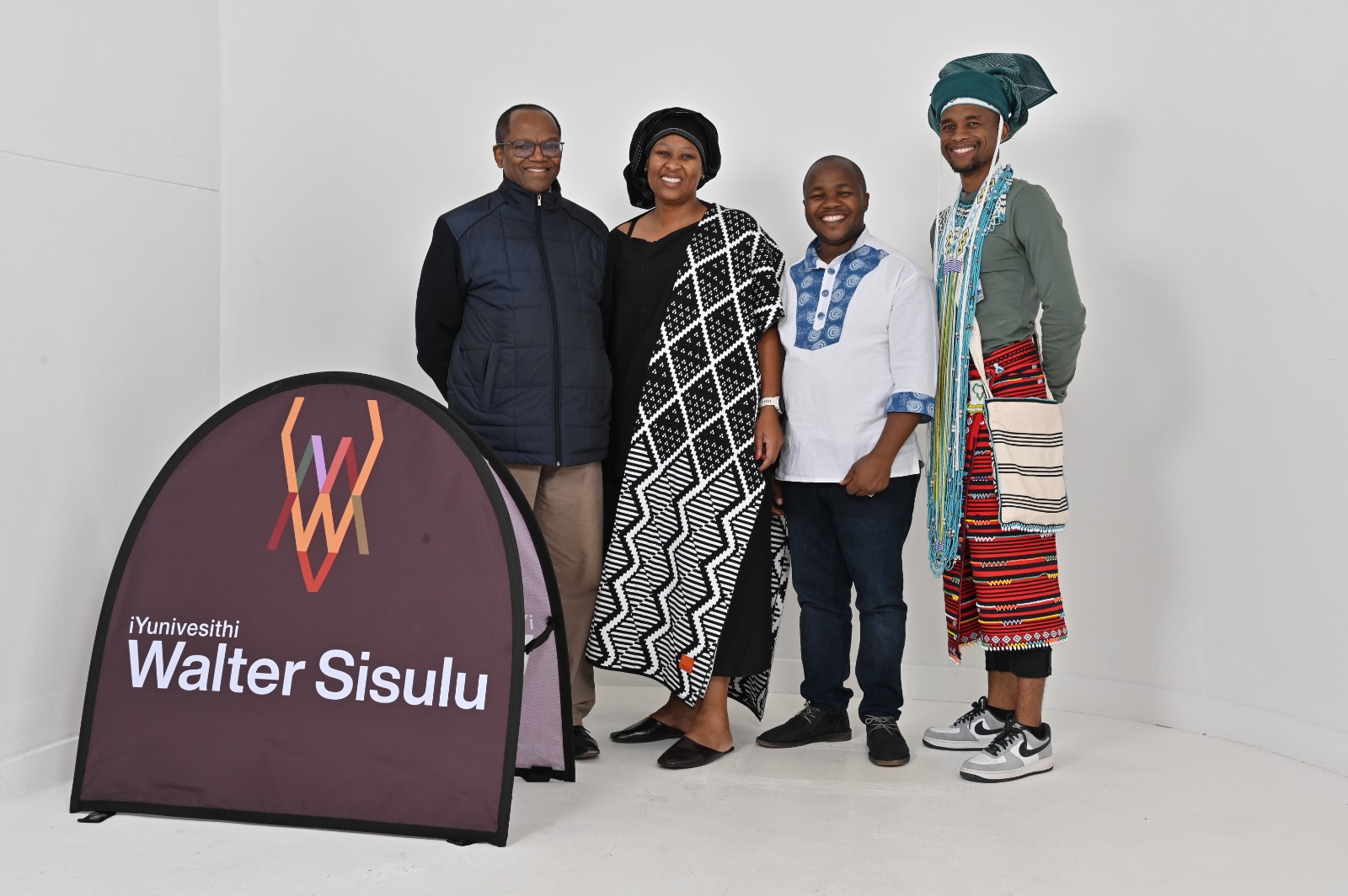
The Faculty of Medicine and Health Sciences proudly launched the African Health Programme, a groundbreaking academic initiative designed to reimagine health sciences education through the lens of African knowledge systems, lived realities, and contextual relevance.
Timed to coincide with Africa month, the programme responds to long standing calls for socially responsive health professions education, while positioning itself as a catalyst for transformation in teaching, research, and community engagement.
Faculty Executive Dean Prof Wezile Chitha emphasised the intentionality behind the initiative as an endeavour to reaffirm Africanness and decolonise the academic outlook in pursuit of intellectual sovereignty.
“We unapologetically pursue the agenda to legitimise and institutionalise indigenous and country-based knowledge systems in all our problems. It is our view that indigenous African knowledge systems housed by our communities hold the key to resolving some of the key health challenges we currently face,” Chitha explained.
He highlighted the reality that many patients often first consulted traditional healers before turning to biomedical systems, outlining that the vision is for interface integration, where both systems collaborate rather than compete.
The collaboration across different health systems through this programme is said to carry profound impact and advantages, reshaping the way health is understood, researched, and practiced.
“This dual approach not only bridges indigenous and biomedical systems but also fosters high-quality, impactful research on indigenous and community-based practices, generating evidence that informs policy, strengthens health systems, and contributes to global knowledge. Ultimately, the programme positions African communities as co-creators of solutions, empowering them while enriching the broader discourse on health and healing,” added Chitha.
Meanwhile, medical doctor and traditional health practitioner, Dr Olwetu Hoyi, shared his perspective on balancing professional medical practice with respect for patients’ beliefs and traditions.
“I try my best not to impose whatever comes to mind in a spiritual form regarding the patient that is in front of me. I usually wait for the patient to be the one to engage me first before I open up. If that platform is not opened up, I then refrain from saying anything. Unlike when I am in my spiritual space, if needs to be, I would advise a patient who may need hospital referral,” said Hoyi.
Representing the Eastern Cape Department of Health, Prof Margaret Nhlangula expressed the department’s support for the initiative, noting its alignment with a holistic approach to patient care.
“The department has always embraced that there are other modalities, for example looking at the Act of 2007, embraced that there are traditional practitioners. We envisaged that this is a platform which can be regulated, which can be supported, and that can bring value to how we can better manage our patients. We are keen on a solution that is beyond the hospicentric approach,” Nhlangula said.
She emphasised that partnering with traditional health practitioners respects patient choice and enhances quality of care. “If a patient chooses a traditional health practitioner, that is their choice. We are keen to support traditional practitioners so that they can deliver services at the highest quality. We can assist in areas such as infection prevention and control, licensing and regulation, and provision of PPE, amongst others.”
Nhlangula further noted the importance of mutual learning between systems: “They can also share with us their own approaches to certain conditions where we sometimes encounter bottlenecks in treatment. This makes the solidarity very important to us.”
She concluded by highlighting that such initiatives formed part of the clinical governance framework currently being implemented by the department.
By Thandeka Mgqibi