
Languages:
Staff Apps | Enterprises | Media | Support Services | Vision 2030 | Procurement | Tenders | Contact
Staff Apps | Enterprises | Media | Support Services | Vision 2030 | Procurement | Tenders | Contact
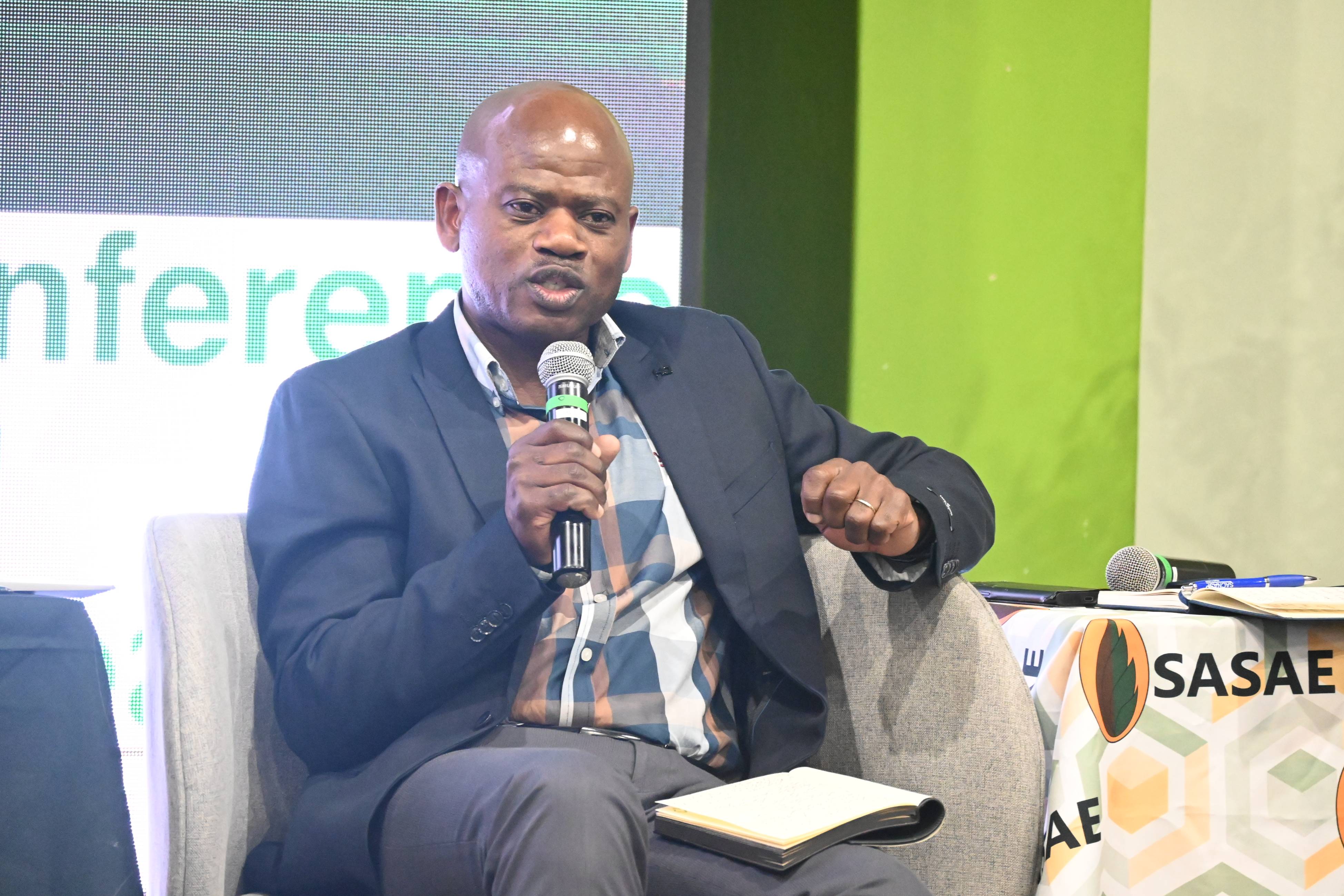
iYunivesithi Walter Sisulu's Faculty of Natural Sciences has announced plans to establish a Department of Agriculture that will equip graduates to translate scientific knowledge into practical solutions for farmers, rural communities and the broader agricultural sector.
The announcement was made by Executive Dean of the faculty, Professor Albert Thembinkosi Modi, at the South African Society for Agricultural Extension (SASAE) Conference, held in partnership with Walter Sisulu from 29 June to 2 July 2026.
Modi said the proposed department would offer a different approach to agriculture qualifications by combining science, technology and practical application.
Rather than producing graduates grounded in theory, the department will prepare professionals capable of responding to real world agricultural challenges.
"Our aim is to establish a unique qualification compared to the ordinary qualifications such as Bachelor of Agriculture and Bachelor of Science in Agriculture, where despite the fact that agriculture is practical, the curriculum is very theoretical," said Modi.
He explained that the proposed Bachelor of Science in Agricultural Technology and a Postgraduate Diploma in Agricultural Technology would not only prepare students for careers in agriculture, but also create opportunities for graduates from other scientific disciplines to enter the sector.
Modi asserted that Walter Sisulu was well positioned to establish the department, citing the university's existing laboratory infrastructure, available land and partnerships with agricultural institutions across the Eastern Cape.
"We have Tsolo Agricultural College, we have Magwa Tea Estate, we've got Dohne Research Station, Mthatha Dam, we've got vast amounts of land in the former Transkei. We have space in the laboratories and even space in the university to establish a small farm for practicals for students. All we need is to appoint three lecturers," he said.
The announcement comes as agricultural extension continues to gain prominence for its role in transferring scientific knowledge from researchers to farmers and rural communities.
Modi said the proposed department would take this approach by ensuring that research generated within the university delivers tangible benefits beyond the laboratory.
"While we develop new knowledge in the laboratory, we also need to come up with a way that would allow that knowledge to be used by extension officers and policy. One of the major reasons why we have to start agriculture is to quickly reach out to the people. Extension is a better way to create that bridge between the university and the people. They don't have to be specialists in science. They have to be specialists in understanding the meaning of science for practical purposes," he said.
Modi added that the department would strengthen Walter Sisulu's contribution to agricultural innovation by producing graduates who understand both the science behind agriculture and the practical realities facing farming communities. This also aligns with the United Nations’ Sustainable Development Goal number one, which aims to end poverty.
By Yanga Ziwele