

About Walter Sisulu
Get in touch
Email Address:
Contact Numbers:
Mthatha: 047 502 2100
Butterworth: 047 401 6000
East London: 043 702 9200
Potsdam: 043 708 5200
Chiselhurst: 043 709 4000
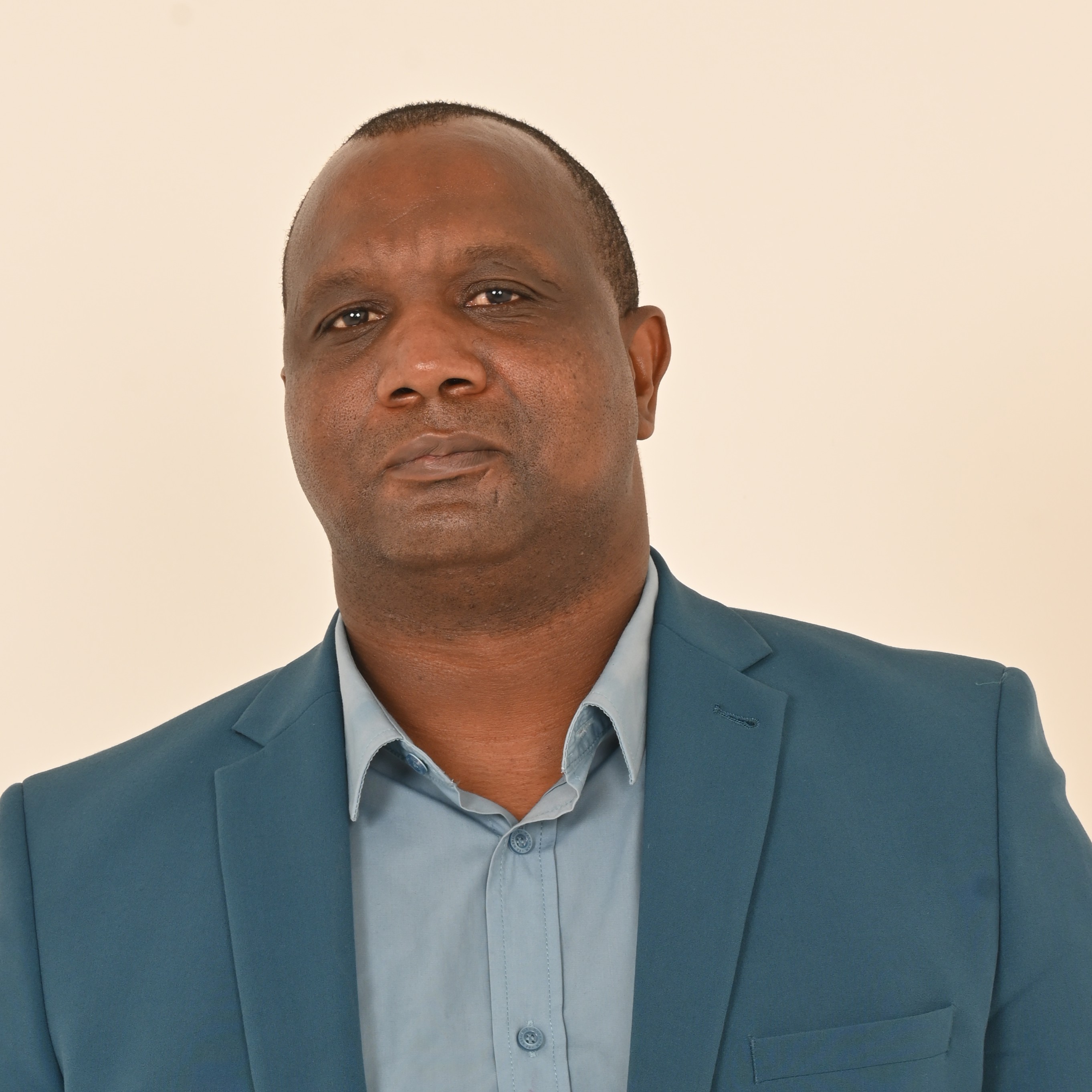 Doctor Raphael Nhongo has obtained the coveted National Research Foundation (NRF) Rating, a feat which places him amongst the country’s leading scholars for his contribution to advancing the intellectualisation of under resourced African languages.
A linguist in the Faculty of Law, Humanities and Social Sciences at iYunivesithi Walter Sisulu, Nhongo’s C2 NRF rating recognises his research efforts in Language Policy and Planning, with a focus in translanguaging, teaching and learning, and terminology development.
The scholar’s research has sought to strengthen the role of native African languages in academic spaces, including their use in teaching and learning Science, Technology, Engineering and Mathematics (STEM) subjects.
“This rating is a significant source of encouragement, as it provides recognition of the quality and relevance of my research contributions within the African academic community and beyond. I am particularly pleased that this achievement not only acknowledges my individual research profile but also contributes to strengthening Walter Sisulu’s research standing and its broader efforts to enhance its position among universities nationally and internationally,” said Nhongo.
At the heart of Nhongo’s work is the use of language as a tool to expand access to knowledge.
Through translanguaging and terminology development, his research aims to help curb the linguistic barriers associated with multilingual education, while establishing African languages as capable of carrying specialised knowledge.
Translanguaging, the practice of drawing on multiple languages in communication and learning, forms a huge part of Nhongo’s work, and seeks to enable individuals to use their full linguistic tools to understand and translate complex ideas.
“My research seeks to address issues of language use, functionality and linguistic justice, particularly within educational contexts. Rather than merely describing or critiquing the status of previously marginalised languages, my research proposes practical and realistic approaches to their advancement and development, with the aim of enabling under-resourced languages to function effectively within intellectual and academic spaces,” he said.
Among his leading publications is Translanguaging as an Instructional Method in Science and Mathematics Education in English Second Language Classroom Contexts, published in the Independent Journal of Teaching and Learning.
His subsequent research has expanded into terminology development and the intellectualisation of African languages, including his 2024 publication, Terminology Development through Translanguaging as an Intellectualisation Strategy for African Languages in Andragogic Contexts.
Ngongo’s work is driven by the ongoing discourse around transformation in South African education, where previously marginalised languages are considered for use in the teaching and learning of STEM subjects.
“My research contributes to this agenda by exploring how translanguaging and terminology development can help address some of the practical and linguistic challenges associated with the implementation of multilingual education,” he said.
The growing visibility of his research has resulted in increased citations, invitations to contribute to special journal issues and edited books, as well as opportunities to examine postgraduate research.
Nhongo offered that he hoped the C2 rating will open further opportunities for research funding and collaboration, while contributing to the strengthening of iYunivesithi Walter Sisulu’s research profile.
“I believe that doctoral supervision will open a new chapter in my research journey by creating opportunities for deeper scholarly engagement, research collaboration and mentorship,” he said.
By Yanga Ziwele