
Languages:
Staff Apps | Enterprises | Media | Support Services | Vision 2030 | Procurement | Tenders | Contact
Staff Apps | Enterprises | Media | Support Services | Vision 2030 | Procurement | Tenders | Contact
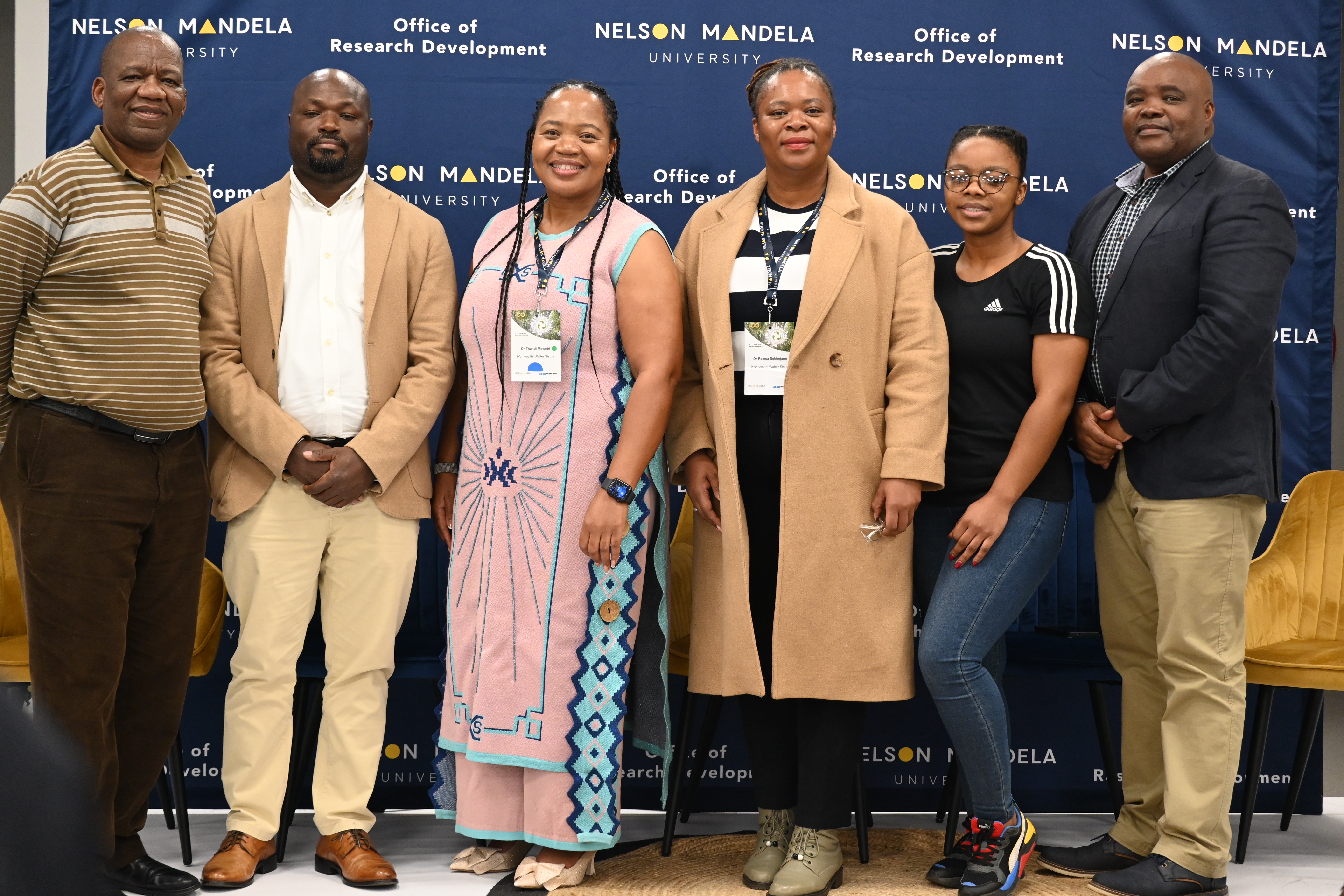
iYunivesithi Walter Sisulu (Walter Sisulu) Vice-Chancellor and Principal, Prof Thandi Mgwebi, has placed international academic collaboration at the centre of higher education transformation, saying universities can no longer operate in isolation as global networks become increasingly essential for postgraduate development, research growth and access to funding.
Her remarks followed her participation in the 2026 Australia-Africa Universities Network (AAUN) Conference held in Gqeberha by the Nelson Mandela University from the 8 to 11 June under the theme “Circular Economies for Inclusive and Sustainable Futures,” which brought together senior university leaders and researchers from across Africa and Australia to engage on strengthening institutional partnerships and advancing collaborative approaches to postgraduate training, research supervision and innovation-driven development.
Established 15 years ago, the AAUN is a collaborative platform that connects universities across Africa and Australia to promote research, innovation, academic mobility and knowledge exchange.
Through joint projects and partnerships, the network enables institutions to address common challenges while building capacity and creating opportunities for students, academics and researchers.
Reflecting on the value of the network for Walter Sisulu, Prof Mgwebi said it offers practical opportunities to strengthen the university’s research agenda and expand its global reach.
“The Australia-Africa Universities Network is a powerful catalytic tool for us to tap into funding opportunities, to tap into course supervision models, but also for cultural exchange,” Prof Mgwebi said.
She noted that postgraduate funding and research support remained persistent challenges within South African universities, making collaborative international partnerships increasingly important for institutional sustainability and growth.
“If we utilise these networks strategically, it can help us in co-supervision, but also in co-funding modalities. That is the main catalytic tool for us as a university,” she said.
Prof Mgwebi said universities were increasingly turning to networks and consortia as practical tools to strengthen research output, deepen collaboration and improve societal impact through shared expertise.
“Networks and consortia are the new tools and they are so astute and readily available for us so that we can join hands with institutions that share the same challenges as us in terms of what we want to impact society on and the kind of knowledge production that we want to embark on,” she said.
She added that AAUN’s strength lies in its diversity, bringing together African and Australian universities that are working on similar development challenges through collaborative research and knowledge production.
“This is a really powerful tool with a lot of African universities, not just South Africa, and also a diverse pool of Australian universities,” she said.
Looking ahead, Prof Mgwebi said the future of higher education will depend on how effectively institutions use such networks to share resources, strengthen supervision models and co-create knowledge that responds to global and local challenges.
“The Australia-Africa Universities Network is a powerful catalytic tool for us to tap into funding opportunities, to tap into course supervision models, but also for cultural exchange,” she concluded.
By: Yolanda Palezweni