
Languages:
Staff Apps | Enterprises | Media | Support Services | Vision 2030 | Procurement | Tenders | Contact
Staff Apps | Enterprises | Media | Support Services | Vision 2030 | Procurement | Tenders | Contact
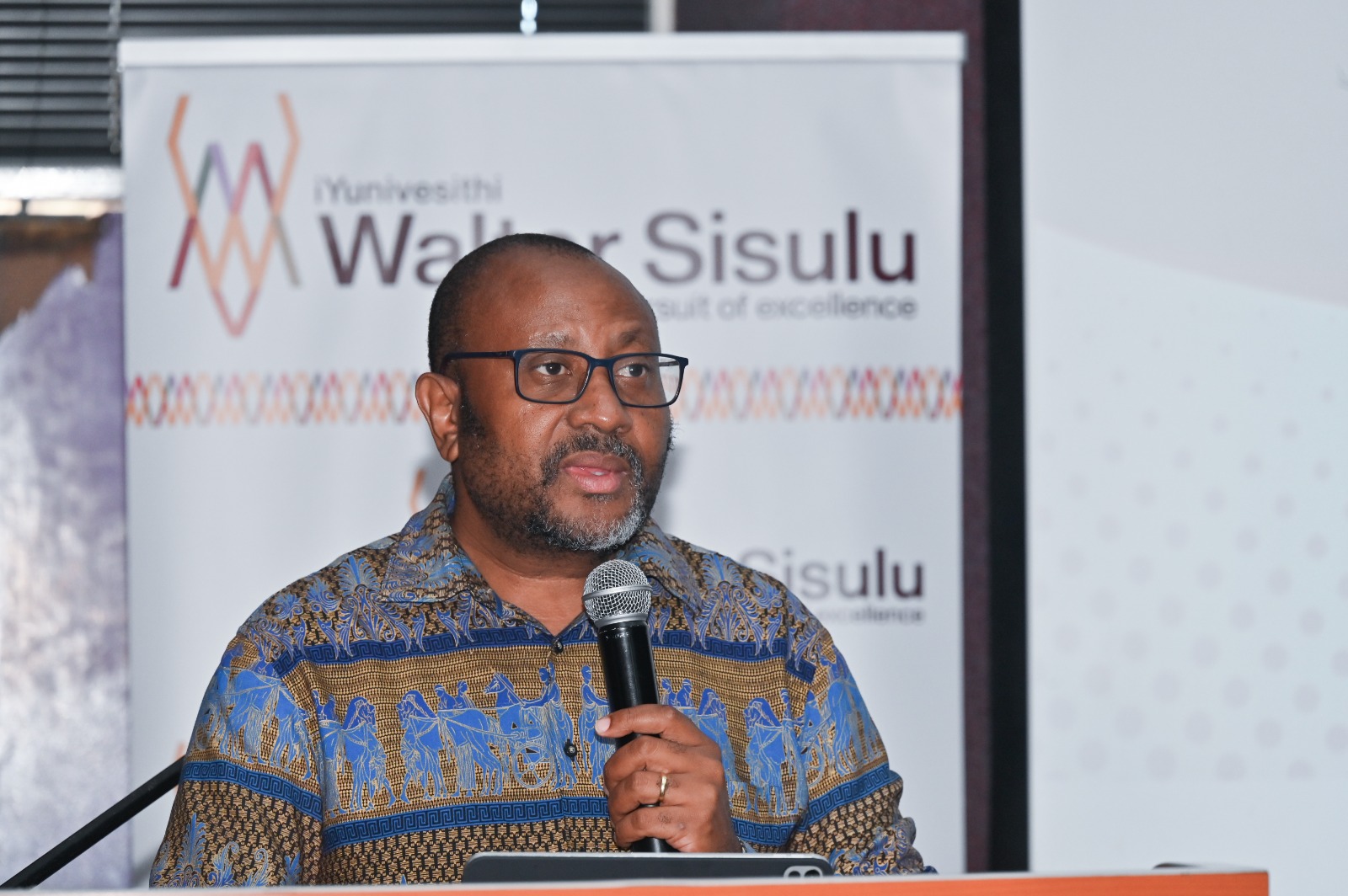
iYunivesithi Walter Sisulu marked a historic turning point in South Africa’s healthcare journey in a groundbreaking step to bridge the gap between western and traditional African medicine, with the launch of an Indigenous Health Systems Research Institute (IHSRI).
This historic initiative, housed within the Faculty of Medicine and Health Sciences, seeks to unite medical practitioners and traditional health practitioners in a powerful collaboration that envisions a healthier and more inclusive future.
Addressing the audience at the Mthatha Health Resource Centre on Tuesday, where the launch took place, faculty Executive Dean Prof. Wezile Chitha underscored the importance of this journey, noting that the faculty served predominantly African communities.
“The launch of the IHSRI is an unambiguous affirmation of the importance of African traditional health values systems and knowledge and the centrality of mainstreaming these within the current health system. South Africa’s healthcare system has long acknowledged the coexistence of western and traditional medicine,” said Chitha.
He emphasised the need to strengthen indigenous health systems through research, innovation, and community engagement, recognising the richness of traditional healing practices, herbal treatments, and spiritual rituals.
Echoing the same spirit, traditional health practitioner and MEC for Sports, Recreation, Arts and Culture (DSRAC), in the Eastern Cape, Sibulele Ngongo, showed support for the initiative. She described the launch as a courageous and necessary step toward reshaping the understanding of health, healing, and development across Africa.
“This initiative restores dignity, identity, and ownership over African knowledge systems that have been marginalised for centuries. Traditional medicine’s role as a major provider of healthcare cannot be underestimated. For generations, African communities have practiced preventative healthcare through nutrition, herbal medicine, communal care, physical activity, and spirituality, systems refined through centuries of observation and adaptation,” she explained.
Ngongo praised the Department of Health’s progress through the Traditional Health Practitioners Act of 2007, noting its alignment with the World Health Organization’s recognition of traditional medicine, which integrates herbalism with African spirituality.
The IHSRI will be spearheaded by the School of Biomedical Sciences under the leadership of Prof Constance Rusike, who explained its purpose: “This institution exists to research the intersection between allopathic medicine and indigenous health systems, exploring how they can complement one another, because whichever way you look at it, our people use traditional medicine,” said Rusike.
She mentioned ongoing research into medicinal plants and collaborations with traditional healers and nurses in district hospitals, with hope that the Institute will bridge the persistent separation between the two healthcare systems.
“IHSRI embodies integration rather than opposition, demonstrating how laboratory science can engage respectfully with indigenous plant knowledge to produce innovations that are locally grounded yet globally valuable,” Rusike added.
Community engagement has already begun, with rural narratives guiding the learning process. The institute also aims to explore how language, cultural interpretations of illness, and multilingual care can bridge trust, diagnosis, and rapport amongst patients.
The work of the IHSRI aligns with the University’s vision of being an African university that is locally relevant and influenced yet remains globally competitive.
Future collaborations are envisioned with countries such as Tanzania and India, where traditional medicine also plays a central role in healthcare.
By Thandeka Mgqibi