
Languages:
Staff Apps | Enterprises | Media | Support Services | Vision 2030 | Procurement | Tenders | Contact
Staff Apps | Enterprises | Media | Support Services | Vision 2030 | Procurement | Tenders | Contact
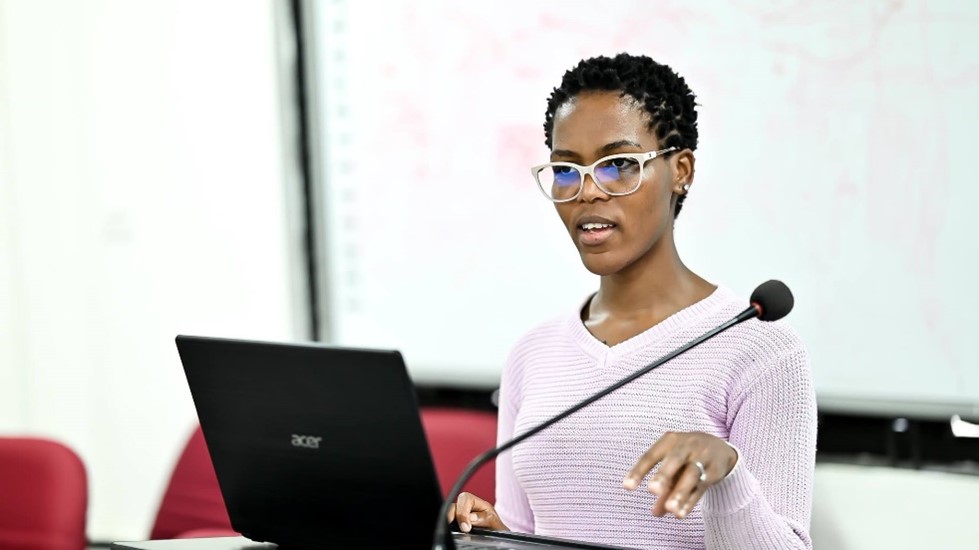 KOTTAYAM, INDIA- Port St John's women, an Eastern Cape flood-prone community, are not merely victims of climate disasters, but are the backbone of local resilience, according to research presented by iYunivesithi Walter Sisulu Master's researcher Thokoza Zwelendaba-Kasa.
Zwelendaba-Kasa presented findings from her qualitative study, Rural Women's Resilience and Flood Adaptation: A Case Study of Port St. John's, during an academic engagement at Mahatma Gandhi University in Kottayam, India.
The research examined how women in the Eastern Cape municipality prepare for, respond to and recover from devastating floods amid growing climate-related disasters.
Drawing on interviews with rural women, community leaders and municipal officials, the study found that women often rely on indigenous knowledge, informal savings groups known as stokvels and community-led initiatives to sustain households when institutional support is delayed.
"Our findings show that rural women are not passive victims of disasters. They are active agents of resilience, using indigenous knowledge, collective action and informal support systems to protect their families and rebuild their communities," Kasa said during her presentation.
The research revealed that women use environmental indicators passed down through generations to anticipate flooding, adapt farming practices and protect household assets before disasters strike. In the aftermath of floods, they mobilise community networks and stokvels to repair damaged homes, replace essential belongings and provide emotional support to affected families.
Despite their pivotal role, Zwelendaba-Kasa said women continue to face significant barriers in disaster governance.
"There is a clear gap between South Africa's progressive gender-responsive disaster management policies and what rural communities experience in practice. Women's voices are still largely absent from municipal planning and decision-making," she said.
The study highlighted that delayed government assistance, limited municipal capacity and patriarchal decision-making structures continue to undermine community resilience in Port St. John's. Participants reported waiting months for disaster relief while women carried the burden of restoring livelihoods, caring for families and rebuilding damaged homes.
Zwelendaba-Kasa argued that disaster management policies should move beyond recognising women as vulnerable groups and instead position them as key partners in climate adaptation and resilience planning.
"Meaningful participation of rural women in disaster planning is not optional it is essential if communities are to build resilience against increasingly frequent climate-related disasters," she said.
Zwelendaba-Kasa's presentation highlighted the growing contribution of emerging African researchers to global discussions on climate change, disaster risk reduction and sustainable rural development, while stressing the lived experiences of women whose knowledge and leadership remain critical to building resilient communities.
The presentation formed part of a benchmarking visit by an iYunivesithi Walter Sisulu delegation to Mahatma Gandhi University, where academics from South Africa and India are sharing best practices in postgraduate research, innovation and institutional development.
The academic visit forms part of an ongoing partnership between Walter Sisulu and Mahatma Gandhi University aimed at advancing postgraduate studies, strengthening research collaboration and promoting innovation in higher education.
By: Sinawo Hermans