
Languages:
Staff Apps | Enterprises | Media | Support Services | Vision 2030 | Procurement | Tenders | Contact
Staff Apps | Enterprises | Media | Support Services | Vision 2030 | Procurement | Tenders | Contact
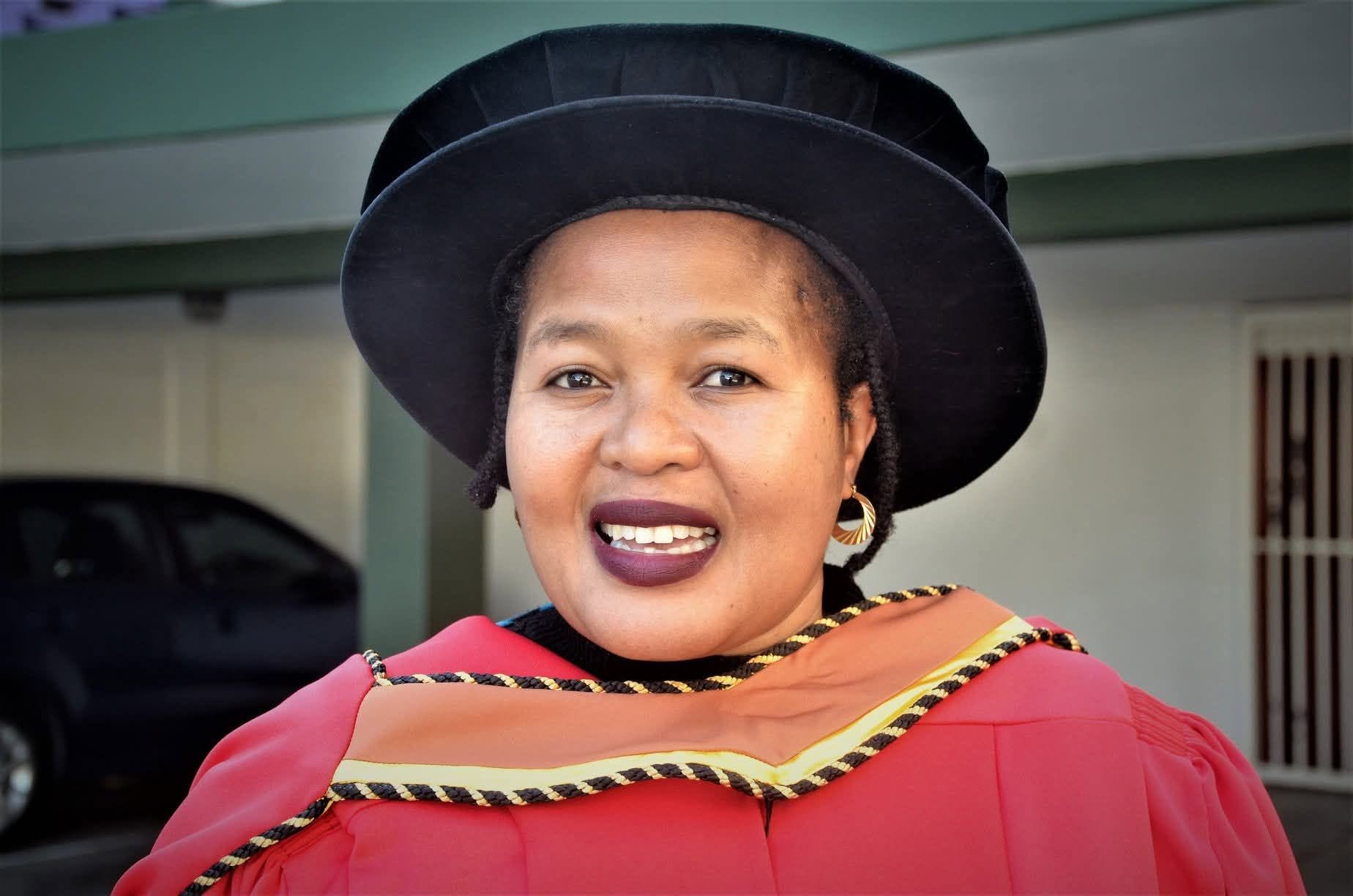 For Walter Sisulu, the pursuit of knowledge extends far beyond lecture halls and national borders, and for one of its Associate Professors, Vikelwa Nomnga, it has recently taken the form of a remarkable academic journey spanning China and Macau.
It was during this journey, both in the actual travel to the city of Hangzhou and in the online presence in Macau, that global learning, cutting-edge research, and international collaboration converged to produce tangible outcomes for Walter Sisulu and its community.
Fresh from representing the university at the Digital Economy and Poverty Reduction Seminar in Hangzhou, China, Professor Nomnga recently returned to South Africa armed with fresh perspectives on how digital innovation can transform education, research and community development.
“Just two days later, my global engagements culminated in another milestone when I, together with three international academics, collaborated and were awarded Best Paper at the 13th Advances in Hospitality and Tourism Marketing and Management (AHTMM) Conference, hosted by the Macau University of Science and Technology,” she said gleefully.
Hosted under the Chinese Government's Short-Term Capacity Development Program, the seminar in Hangzhou brought together academics from around the world to explore how digital technologies can accelerate economic growth, reduce poverty, and promote inclusive development.
Professor Nomnga described the seminar experience as an invaluable opportunity to examine digital transformation through a global lens and identify practical solutions applicable to South Africa.
“Under the theme, Digital Economy and Poverty Reduction, a platform was provided for participants to engage in a global perspective on digital transformation, innovation, and inclusive development. As an academic in the field, the seminar offered insightful perceptions on how digital technologies can support economic growth, reduce poverty and create opportunities for our communities," she said.
Although her research focuses on leadership, organisational culture, and hospitality management, Professor Nomnga said the seminar demonstrated that digital innovation reaches far beyond technology itself. It highlighted how digital tools can strengthen teaching, research and community engagement while supporting broader socio-economic development.
Professor Nomnga believes the lessons learned at the seminar hold significant value for South Africa, particularly for institutions such as Walter Sisulu, whose footprint extends across predominantly rural communities.
"China's progress in the digital economy demonstrates the importance of sustained investment in technology, digital skills and collaborative partnerships that create meaningful economic participation,” she said.
She added that the experience would enrich both her teaching and research while equipping students with the skills needed to thrive in an increasingly digital tourism and hospitality sector.
The international exposure proved timely, as only two days after returning home, Professor Nomnga would attend the conference in Macau online, wherein she and co-authors from Kenya, the United Kingdom, and the United States received the conference's Best Paper Award for their study titled “The Influences of National Culture on Leadership and Employee Relations in Small Hospitality Firms: Evidence from South Africa, Kenya and Ghana.”
The study examined how national culture influences leadership practices and employee relations within small hospitality businesses across three African countries.
"The thematic analysis revealed four major themes: respect-based hierarchy and culturally managed authority; benevolent leadership and the material limits of care; culturally mediated employee voice; and relational trust under economic constraint," Professor Nomnga explained.
The quartet’s research found that leadership within small hospitality enterprises is shaped not only by organizational structures but also by deeply embedded cultural values, interpersonal relationships, and prevailing economic realities.
According to the globe-trotting researcher, the findings underscore the importance of developing culturally intelligent leaders and implementing human resource policies that respond to the unique contexts of small hospitality businesses.
Viewed together, Professor Nomnga’s experiences in China and at the Macau conference reflected the growing influence of Walter Sisulu’s scholars on the global academic stage.
“These experiences also demonstrate how international collaboration and research excellence can generate practical knowledge capable of advancing teaching, informing policy and contributing to sustainable development both locally and internationally,” she concluded.
By Thando Cezula