14. Life Below Water
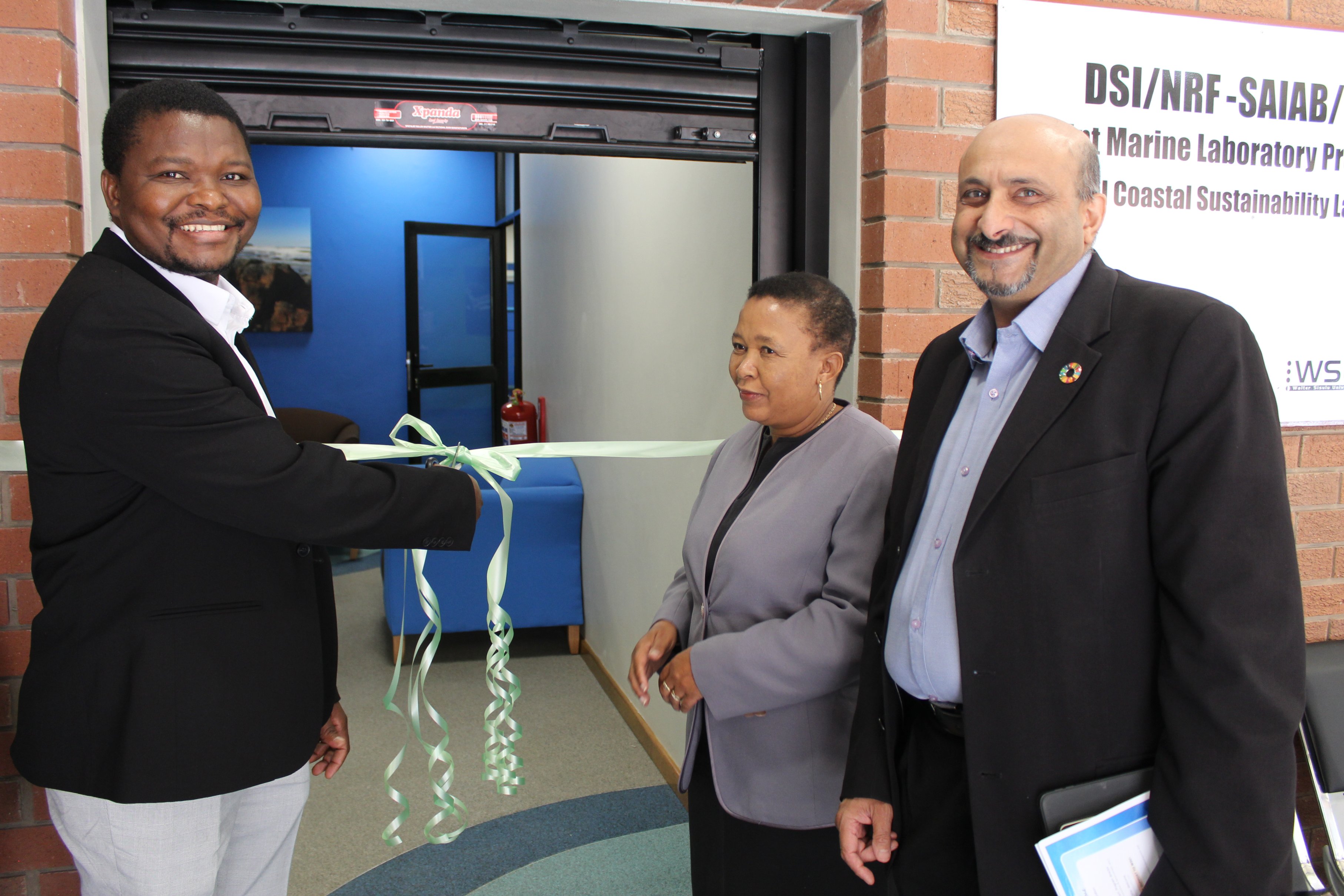
Ribbon cutting at the Walter Sisulu University marine laboratory

SDG 14 Life Below Water

At iYunivesithi Walter Sisulu, stewardship of coastal, estuarine, and marine ecosystems is a crucial dimension of the institution's environmental, scientific, and community development agenda. Situated along the Indian Ocean coastline of the Eastern Cape, Walter Sisulu leverages its strategic geographical location to host national marine monitoring infrastructure, conduct transdisciplinary research into coastal and freshwater aquatic systems, and pioneer community-driven aquaponics and blue economy innovations.

Oceans & Coasts National Pollution Laboratory (NPL)

  • National Coastal & Marine Monitoring Infrastructure. Under a Memorandum of Understanding (MoU) with the national Department of Environmental Affairs (DEA / now DFFE) as part of South Africa's Operation Phakisa ocean economy initiative, Walter Sisulu hosts and manages the Oceans and Coasts National Pollution Monitoring Laboratory (NPL). The NPL systematically collects and analyses water quality, sediment, and biota samples across South African coastal waters and estuarine environments, working toward formal South African National Accreditation System (SANAS) accreditation.
  • Ocean Economy & Aquaculture Baseline Data. The laboratory generates baseline coastal water quality datasets to assess cumulative environmental impacts associated with national ocean economy developments, including marine aquaculture nodes and commercial embayments. Provides environmental baseline monitoring near land-based pollution sources to protect marine biodiversity, while supporting local municipalities with recreational coastal water quality assessments and building regional scientific analytical capacity.

Sustainable Marine and Freshwater Economic Development (SMAFED)

  • Aquaculture Innovation & Community Capacity Building. The Sustainable Marine and Freshwater Resource Management and Economic Development (SMAFED) research niche area at Walter Sisulu, led by Professor Grace Okuthe, conducts research and community outreach examining how aquaculture can be leveraged for climate adaptation and food security. SMAFED partnered with the OR Tambo Cooperative Development Centre (OTCDC) and Food Energy Water South Africa Tertiary Co-Operative (FEWCOOP SA) to host community workshops and integrate rural communities into the knowledge economy.
  • Solar-Powered Recirculating Aquaponics Systems. Read the story. Through its collaboration with OTCDC and local experts, SMAFED develops and constructs solar-powered recirculating aquaculture systems and integrated aquaponics farms. Nutrient-rich water from fish tanks is continuously recycled to irrigate drought-resistant crops, establishing closed-loop sustainable food production that mitigates agricultural runoff into marine and freshwater systems.
  • Blue Economy & Circular Waste-to-Feed Technologies. In alignment with blue economy principles, SMAFED's initiatives include converting local organic food waste into affordable, eco-friendly fish feed. This direct industry and community engagement reduces food waste heading to coastal landfills while empowering rural youth, women, and persons living with disabilities through sustainable aquacultural micro-enterprises and long-term employment.

Transdisciplinary Coastal Climate Resilience Research

  • NRF-Funded Marine & Freshwater Livelihoods Study. Walter Sisulu partnered with the University of the Free State (UFS) on a National Research Foundation (NRF) -funded study (2024 –2026) investigating climate change impacts on livelihoods across former homeland regions, including coastal and estuarine zones of the Transkei. Led by SMAFED's Professor Grace Okuthe, the project combines marine/freshwater ecological monitoring with indigenous research methodologies to analyse three decades of socio-economic shifts and assist local authorities with watershed management and ecological stewardship.

This account is drawn from the iYunivesithi Walter Sisulu Sustainability Impact Progress Report, prepared against the Times Higher Education Sustainability Impact Ratings methodology.

The Sustainable Development Goals icons are United Nations marks, used here for information. The content of this publication has not been approved by the United Nations and does not reflect the views of the United Nations or its officials or Member States. Read the Sustainable Development Goals.