15. Life on Land
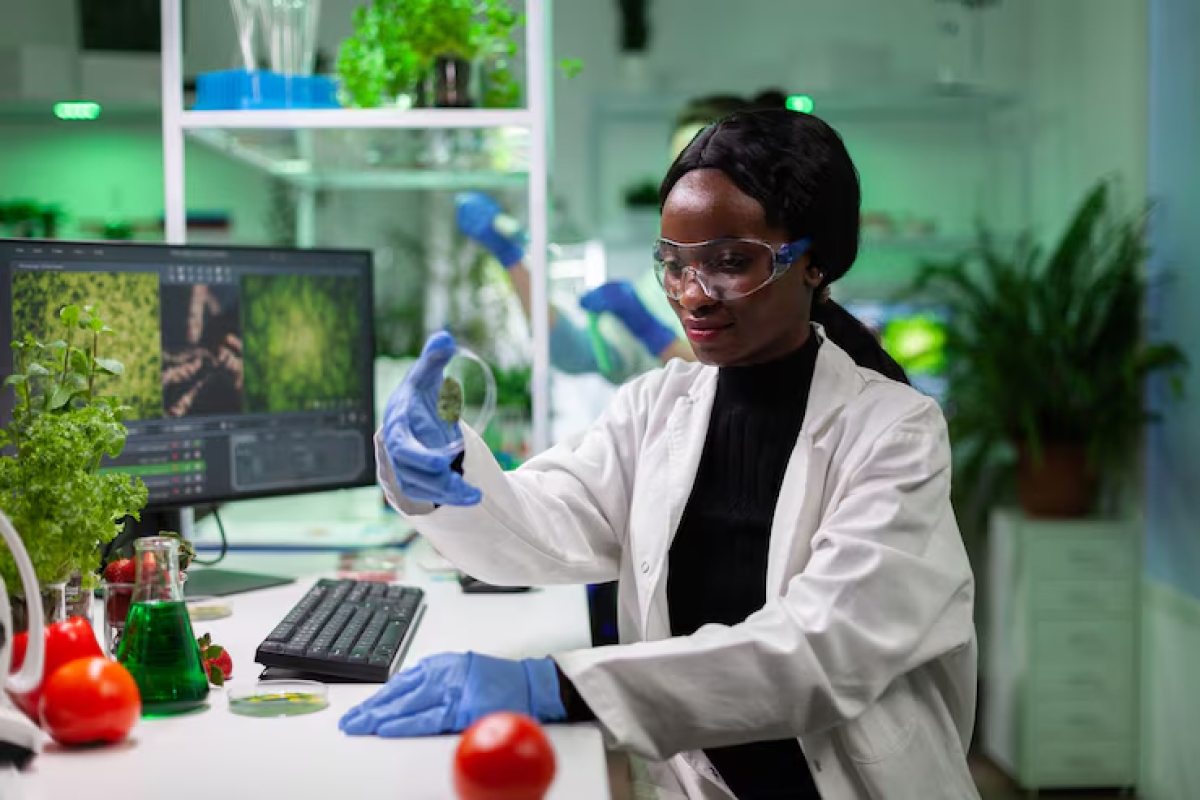
Laboratory work with plants and food crops

SDG 15 Life on Land

At iYunivesithi Walter Sisulu, terrestrial ecosystem stewardship, land reform research, indigenous flora preservation, and sustainable agrarian practices are central to the university's developmental mission in the Eastern Cape. Operating across rural and peri-urban landscapes, Walter Sisulu advances land conservation, combatting land degradation, promoting biodiversity, and empowering rural communities through bio-trade and agricultural innovations.

Research on Land Ecosystems, Indigenous Flora & Land Reform

  • African Medicinal Flora and Fauna Research Niche Area (RNA). Walter Sisulu established the African Medicinal Flora and Fauna Research Niche Area, led by Professor A. Oyedeji, to systematically study, document, and preserve indigenous medicinal plants and terrestrial bio-resources in the Eastern Cape. Organised the Indigenous Knowledge Bio-Trade Indaba, bringing together researchers, traditional practitioners, and industry stakeholders to promote sustainable harvesting and conservation of medicinal plants, nutraceuticals, herbal infusions, and natural cosmeceuticals.
  • Land Reform & Female Agri-Preneurship Studies. Research conducted by Public Management academic Dr. Anthony Masha examines structural land scarcity constraints facing female agri-preneurs in the Eastern Cape. His published framework offers actionable policy mechanisms to expedite land reform, identify deserving land beneficiaries, and provide specialised training to enable women to overcome patriarchal land tenure barriers.
  • Cultural & Customary Land Ownership Research. At the South African Humanities Deans' Association (SAHUDA) conference hosted at Walter Sisulu, research presented by Netshithothole Rialivhuwa Tertia highlighted traditional and customary restrictions that exclude rural women from land and cattle ownership, advocating for microfinance, land titling reform, and agricultural mentorship.
  • Three-Decade Land Use & Indigenous Adaptation Study. In an NRF-funded transdisciplinary partnership with the University of the Free State (UFS), Walter Sisulu researchers led by Professor Grace Okuthe investigate three decades of land-use transitions, soil degradation, and indigenous climate resilience strategies across former homeland territories in QwaQwa and the Transkei.

Educational Outreach & Community Land Ecosystem Stewardship

  • Kieskammahoek Bio-Trade & Cannabis Value Chain Workshops. Read the story. iYunivesithi Walter Sisulu partnered with the Department of Rural Development and Agrarian Reform (DRDAR), the University of Fort Hare, and the National Research Foundation (NRF) to host a two-day workshop for Burnshill community farmers in Kieskammahoek. Provided practical training in plant breeding, tissue culture, seed generation, sustainable cultivation, and home-based essential oil extraction, converting local agricultural land into sustainable micro-enterprises while conserving plant genetic diversity.
  • International Youth Summit on Land and Economic Freedom (IYSOLEF 2025). Read the story. A delegation of academics and student leaders from Walter Sisulu represented the university at the IYSOLEF 2025 summit in Zimbabwe, participating in international policy dialogues on African land reform, sustainable soil stewardship, and rural economic liberation.
  • GreenGrow Urban Agriculture & Soil Education. Read the story. Launched by the Faculty of Natural Sciences under Executive Dean Professor Albert Modi, the GreenGrow Project engages students across faculties and student residences in vegetable production competitions. Teaches practical skills in organic soil management, crop rotation, and sustainable land cultivation to combat food insecurity and foster environmental stewardship.

Action, Land Conservation & Institutional Partnerships

  • Signature Theme — "Food Futures. Sustainable Agriculture and Food Systems": Walter Sisulu formally designated "Food Futures: Sustainable Agriculture and Food Systems" as one of three institutional signature pillars under its strategic framework, concentrating research and community engagement on land health and food security.
  • DRDAR Strategic MoU Renewal (2024–2029). Walter Sisulu renewed its overarching Memorandum of Understanding (MoU) with the Eastern Cape Department of Rural Development and Agrarian Reform (DRDAR) through March 2029. The partnership guides joint research-informed land policy development, sustainable agricultural practices, and rural development initiatives across the province.
  • Co-operative Land Adaptation via Community Imbizo Platforms. Through traditional Imbizo and Lekgotla community platforms, Walter Sisulu researchers work directly with rural traditional leaders and smallholder farmers to co-design land restoration strategies and integrate indigenous knowledge into municipal spatial planning.

Land-Sensitive Waste Disposal & Hazardous Material Management

  • Campus Environmental & Hazardous Waste Controls. In accordance with national environmental regulations and THE Impact standards, Walter Sisulu maintains operational policies governing the safe handling, storage, and disposal of laboratory chemicals and hazardous waste across all medical, engineering, and science delivery sites.
  • Plastic Minimisation & Circular Resource Recovery. Through campus administrative modernisation and digital learning management systems (WiSeUp and Moodle), the university continues to minimise paper consumption and single-use plastic waste across operations. Converts agricultural plant biomass and food waste into organic compost and value - added essential oil products, diverting organic waste away from terrestrial landfills

This account is drawn from the iYunivesithi Walter Sisulu Sustainability Impact Progress Report, prepared against the Times Higher Education Sustainability Impact Ratings methodology.

The Sustainable Development Goals icons are United Nations marks, used here for information. The content of this publication has not been approved by the United Nations and does not reflect the views of the United Nations or its officials or Member States. Read the Sustainable Development Goals.